
Is dissociation healthy? It is one of the most common questions I hear from neurodivergent adults, and it usually arrives right beside a second one: is it dissociation or masking? Dissociation vs masking can look alike from the outside, because in both, a person seems a little less present. On the inside, they are very different experiences. Masking is performing a version of yourself that feels safer to show. Dissociation is stepping back from your own experience altogether. This post is for autistic, ADHD, and AuDHD adults, and the people who love them, who want to understand both.
Tasha came to see me in her mid-forties, about a year after she learned she was autistic. (Name changed to protect privacy.) She described a day that went perfectly. She ran a two-hour budget meeting, smiled at the right moments, remembered everyone’s children’s names, and left to compliments. Then she sat in her car in the parking garage and lost forty minutes. She wasn’t asleep, and she wasn’t on her phone. She just wasn’t there. When she got home, her husband asked about her day, and she told me it felt like answering him from behind a pane of glass. “Is that healthy?” she asked me. “Is that what everyone does after work?” Her question deserves a straight answer, and it is not a strange one. I hear some version of it every week.
In this blog post, I’ll explain what dissociation is and what masking is, in plain language, and why they are so easy to confuse. We’ll look honestly at the question of whether dissociation is healthy, because the true answer is “sometimes, and it depends.” You’ll see why the two so often show up one after the other, the way they did for Tasha. And we’ll finish with some options for noticing what is happening in your own nervous system and what that can look like inside a relationship.
3 Key Takeaways
- Masking is an active performance, adjusting how you look and sound so you are safer or more accepted. Dissociation is a step back from your own experience, a kind of leaving rather than performing.
- Some dissociation is ordinary and protective. It becomes a concern when it is frequent, when you are not choosing it, when you lose time or memory, or when it gets in the way of your safety, your work or the people you love.
- For many neurodivergent adults, the two travel together: masking spends what capacity you have, and dissociation is often what is left when it runs out.
What Dissociation Is, in Plain Language
Dissociation is a disconnection between parts of experience that usually travel together: your thoughts, your feelings, your body, your memory, your sense of where you are. The connection loosens, and you feel further away from your own life for a while.
It sits on a wide range. At the everyday end are the experiences almost everyone has. You drive home and can’t remember the drive. You read a whole page of a book, every word, and keep none of it. (If you have never done this, please write to me and tell me your secret.) Further along are experiences that feel stranger: the world looking flat or unreal, your own voice sounding like someone else’s, watching yourself from slightly outside, or losing chunks of time you can’t account for.
Dissociation is not one diagnosis. A large meta-analysis of studies using the Dissociative Experiences Scale found dissociative symptoms across nearly every diagnostic group it looked at, not only in dissociative disorders, with the highest scores in dissociative disorders and then posttraumatic stress disorder (Lyssenko et al., 2018). That matters for you, because it means dissociation is a response many nervous systems are capable of, under many different kinds of strain. Having it does not tell you what is “wrong” with you. It tells you that something, at some point, was more than your system could take in all at once.
That is the protective part. When fight or flight is not possible, a nervous system can turn the volume down instead. I’ve written more about that in the post on the dissociation freeze response. For now, the important thing is this: dissociation is something your system does for you, not something you are failing at.
What Masking Is, and How It Differs
Masking (researchers often call it camouflaging) is the work of hiding or adjusting your natural way of being so that you fit in, avoid criticism, or stay safe. It can mean forcing eye contact, rehearsing small talk, copying other people’s facial expressions, suppressing a stim, laughing at the moment everyone else laughs, or holding in a reaction until you are alone.
When autistic adults described camouflaging in their own words, they talked about wanting to fit in and connect with people, and they also talked about the cost: exhaustion, and a sense that their identity was being worn away by the effort (Hull et al., 2017). I hear the same thing in my office all the time. People don’t mask because they are fake. They mask because at some point it worked, and the world made it clear that the unmasked version of them was not welcome.
Here is the difference that matters most:
Masking is effortful and active. You are very much present, watching the room, monitoring your face, running the script. If anything, you are too present, tracking everything at once.
Dissociation is a withdrawal. Part of you steps out of the room so that the rest of you can get through it.
If you’d like more on the longer-term cost of performing all day, the post on masking goes deeper into how it wears on the body over years.
Dissociation vs Masking: Performing or Leaving
Let’s be clear about why the two get confused. From the outside, both can look like a person who seems a bit flat, a bit careful, a bit “not quite here.” A partner or coworker may not be able to tell the difference at all. From the inside, though, they usually feel distinct once you know what to look for.
What Masking Tends to Feel Like
Many people describe masking as busy. Your mind is running two tracks: the conversation and the commentary on how you are doing in the conversation itself. You may feel tense, watchful, or “on.” Afterward, there is often a crash: tiredness, irritability, a strong need to be alone, sometimes a replay of everything you said.
What Dissociation Tends to Feel Like
Dissociation is more often described as quiet, foggy, or far away. Clients tell me things like “I went somewhere else,” “I was watching it happen,” “I could hear him but it didn’t land,” or simply “I lost time.” There is less commentary, not more. Some people notice numbness in the body or that they can’t find their feelings, which can overlap with alexithymia, a difficulty identifying and naming emotions.
A Simple Way to Check In
One question can help you tell them apart in the moment: Am I working hard right now, or am I gone?
Working hard points toward masking.
Gone points toward dissociation.
You won’t always get a clean answer, and that’s fine. Sometimes the honest answer is “I was working hard, and then I was gone,” which brings us to the next part.
So, Is Dissociation Healthy?
Here is the straight answer Tasha asked for. Some dissociation is a normal part of being human, and some of it is a sign that your system is carrying more than it can hold. Both can be true in the same person in the same week.
When It Is Likely Ordinary
Dissociation is usually nothing to worry about when it is occasional, brief, and easy to come back from. Zoning out on a familiar drive, getting lost in a book, drifting during a long meeting: these are a brain conserving effort. Many neurodivergent people also describe a deep absorption in a special interest that can look like dissociation from outside. Losing track of time because you were fully inside something you love is not the same as losing time because you had to leave.
When It May Be Costing You
It is worth paying closer attention when dissociation:
- happens often, or more often than it used to
- happens without your choosing, and you can’t easily come back
- leaves gaps in your memory, or time you genuinely can’t account for
- shows up when safety matters, such as while driving or caring for a child
- keeps you from feeling the good parts of your life along with the hard ones
- leaves the people close to you feeling that you are unreachable
None of these means you are broken. They mean your nervous system has been using a protective strategy so often that the strategy itself has become heavy. That is worth bringing to a neurodivergent-attuned and trauma-informed therapist like me, and especially worth bringing if dissociation came with trauma, if it frightens you, or if you notice persistent feelings that you or the world are not real. In my practice, I often see people who were told for years that they were “spacey” or “not trying,” when what they were actually doing was surviving a level of load nobody around them could see.
The Honest Middle
So the most accurate answer is not “yes” and not “no.” Dissociation is a protective response. Protection is healthy. Needing protection all day, every day, is a sign that the conditions around you are asking too much. The question to sit with is less “is this healthy?” and more “what is my system protecting me from, and how often?”
Why Do the Two So Often Travel Together
For a lot of neurodivergent adults, masking and dissociation are not two separate habits. They are two halves of one very, very long day.
Masking takes capacity: attention, energy, sensory tolerance, emotional effort. It draws on the same limited supply you need for everything else. When autistic adults were asked about camouflaging across different settings, those who camouflaged heavily across many settings reported poorer mental health, and so did those who switched between masking in some places and not in others (Cage & Troxell-Whitman, 2019). What I notice with clients is that the hardest days are often the ones where they masked well. They held it together beautifully, and then there was nothing left.
That is where dissociation often steps in. When the performance ends and the system is depleted, it may not have enough left to come all the way back into feeling. So it turns the volume down. Tasha’s forty minutes in the parking garage were not a failure after a good day. They were the other half of the good day, and her nervous system took it on the way home.
This is also why noticing your body’s signals earlier can help so much. Interoception, your sense of what is happening inside your body, is how you catch a rising load before it tips over. Many neurodivergent people find those signals faint or hard to read, which means they often don’t realize they are running low until they are already gone. (This is what it is for me, by the way, as a neurodivergent human.)
If you think of your neurodivergent nervous system as having a window it can comfortably work inside, masking keeps you looking fine while you are being pushed toward the edge of that window. Dissociation is often what happens when you go past it.
What Helps When You Notice You’re Leaving
These are options, not instructions. Try what fits, adapt it, and drop anything that doesn’t help. If something doesn’t work, that tells you about the approach and the setting, not about your effort.
Notice the Handoff
Many people find it useful to track the moment masking turns into dissociation. You might keep a simple note: where you were, how long you had been “on,” and what the first sign was that you were drifting. Over a few weeks, patterns often appear. Maybe it’s always after back-to-back phone calls or meetings, or after a family dinner with lots of noise and overlapping talk.
Lower the Mask in One Small Place
You don’t have to unmask everywhere to feel the benefit. One option is to find a single setting where you can drop one piece of the performance: stim at your desk, skip the eye contact with a trusted colleague, eat lunch alone without apology. Less performing during the day often means less dissociation at the end of it.
Come Back Gently, Through the Senses
When you notice you’re far away, coming back usually works best through the body, in a way that feels comfortable rather than jarring. Some people press their feet into the floor and notice the pressure. Some hold a familiar, pleasant texture, wrap up in a weighted blanket, hum, or name five things they can see. The goal is a kind invitation back, not a shock.
Build Recovery Into the Plan
If you know a day will require heavy masking, it can help to plan the landing before you take off: a quiet drive, no conversation for the first half hour at home, a predictable meal. This isn’t indulgence. Rest isn’t earned; it’s essential.
If dissociation is frequent, frightening, or tied to trauma, working with a therapist who understands both neurodivergence and trauma can make a real difference. That kind of support is part of what therapy for autistic and ADHD adults can offer.
What This Can Look Like in a Relationship
Dissociation is often misread by the people closest to us. A partner may experience it as being ignored, shut out, or not cared about. You may experience it as simply not being able to reach the words. Both experiences are real.
Here is how it often goes. One partner comes home depleted after a day of masking. The other has been waiting all day to connect and starts talking about something important. The first partner nods, says “mm-hm,” and absorbs nothing. Later, the second partner says, “We talked about this,” and the first genuinely has no memory of it. Now there is hurt on one side and confusion on the other, and very often an argument about whether someone is lying or doesn’t care.
It helps a great deal to name the pattern together, when you’re both regulated, rather than in the middle of it. Some couples agree on a short phrase, such as “I’m not here yet,” which means: I’m not ignoring you, I’m coming back, and I’d like twenty minutes before we talk about anything that matters. The partner who waited deserves a real return, too, so the twenty minutes needs an end and a follow-through.
Understanding the pattern does not erase the impact. If your partner keeps losing important conversations to dissociation, that still matters, and the two of you still need a way to make sure those conversations happen. Compassion and accountability can sit side by side.
For a broader look at how protective states show up in the body, including freeze and fawn, see the 8 F’s of trauma response.
Where This Leaves You
If you have been wondering whether something is wrong with you because you “disappear,” I hope this has loosened that worry a little. Masking is a strategy you learned because it was needed. Dissociation is a protection your nervous system offers when it is overwhelmed. Neither one makes you broken.
What they can do is tell you something. They can show you where the load is heaviest, which settings ask you to perform the most, and where your system is quietly asking for more room. You don’t have to fix all of that at once. Noticing is already a change.
Tasha is still learning to catch the handoff. Some days she does, and she drives home with the radio off and her shoulders down. Some days the parking garage still wins. She no longer thinks it means she’s failing.
If you’d like to talk through what you’re noticing in yourself or in your relationship, you can Book a FREE 20-minute “Clarity & Connection” Zoom session. We go at the speed of your nervous system.
Barbara (Blaze) Lazarony, MA, LMFT #151788
I work with neurodivergent adults and neurodiverse couples.
Client stories referenced in this post are composites, with identifying details changed to protect privacy.
Frequently Asked Questions
Is dissociation always a trauma response?
No. Dissociation can be connected to trauma, and it is common in people who have lived through it, but it also shows up with ordinary stress, sensory overload, exhaustion and long stretches of masking. Everyday zoning out happens to almost everyone. If your dissociation began after a frightening experience or feels tied to memories, it is worth exploring with a trauma-informed therapist.
Can you mask and dissociate at the same time?
Many people describe something close to it. You may keep the outward performance running, nodding and smiling, while inwardly you have stepped far back from the conversation. In my practice, I often see this late in a long social day, when the script keeps going on its own after the person has already left.
Is dissociation common in autistic and ADHD adults?
Many autistic, ADHD, and AuDHD adults describe it, often linked to sensory overload, heavy masking, or past trauma. Research on how often it occurs specifically in neurodivergent adults is still limited, so I’d be cautious about any single figure you see quoted. What I can say is that it comes up regularly in my work, and the people who describe it are not alone.
How do I explain dissociation to my partner?
Try to talk about it at a calm time rather than in the middle of a disconnect. You might say something like, “When I go quiet and far away, it isn’t that I don’t care. My system is overloaded, and I’ve stepped back to cope.” Then agree together on a signal for those moments and a plan for coming back to the conversation.
When should I see a professional about dissociation?
Consider reaching out if dissociation is frequent, if you are losing time or memory, if it happens while driving or in other situations where safety matters, or if you often feel that you or the world is unreal. It is also worth getting support if it frightens you or is straining your relationships. A good therapist will be curious about what it is protecting you from, not focused on stopping it.
References
Cage, E., & Troxell-Whitman, Z. (2019). Understanding the reasons, contexts and costs of camouflaging for autistic adults. Journal of Autism and Developmental Disorders, 49(5), 1899–1911. https://doi.org/10.1007/s10803-018-03878-x
Hull, L., Petrides, K. V., Allison, C., Smith, P., Baron-Cohen, S., Lai, M.-C., & Mandy, W. (2017). “Putting on my best normal”: Social camouflaging in adults with autism spectrum conditions. Journal of Autism and Developmental Disorders, 47(8), 2519–2534. https://doi.org/10.1007/s10803-017-3166-5
Lyssenko, L., Schmahl, C., Bockhacker, L., Vonderlin, R., Bohus, M., & Kleindienst, N. (2018). Dissociation in psychiatric disorders: A meta-analysis of studies using the Dissociative Experiences Scale. American Journal of Psychiatry, 175(1), 37–46. https://doi.org/10.1176/appi.ajp.2017.17010025

Unmasking is often described as a breakthrough.
Freedom.
Relief.
Finally being yourself.
And sometimes, it is.
But for many neurodivergent adults, unmasking brings something far less talked about—grief. This post explores the grief of unmasking and how it shapes neurodivergent identity. This post is for neurodivergent adults and those supporting them. Understanding the grief of unmasking is crucial for healing and self-acceptance.
Not dramatic grief.
Not obvious grief.
Not the kind people gather around and acknowledge.
Quiet grief.
The kind that shows up when the mask comes off and you realize how much of your life was shaped by survival instead of choice. The kind that surfaces late at night, after insight has already arrived. In those moments, I realized just how much I had been carrying, and how deeply those hidden parts of myself longed to be seen. People often reflect on their experiences during these quiet times, leading to a deeper self-awareness and understanding of their neurodivergent identity. The kind that doesn’t ask for fixing—only for recognition. Writing can be a powerful way to process these realizations and emotions, helping to make sense of the grief and support healing.
Masking for years can create significant stress and anxiety, as the constant effort to fit in and hide your true self takes a toll on mental health. The fear of rejection or not belonging can be overwhelming, and the emotional vulnerability of unmasking can bring up deep-seated fears. Many neurodivergent individuals feel like a square peg trying to fit into a round hole, struggling to conform to societal norms that were never designed for them. Unmasking is about finding an authentic fit, rather than forcing yourself into a mold that doesn’t match who you are.
The act of unmasking can lead to feelings of grief over what was lost during the time spent pretending to be someone else.
Grief and loss happen to all of us, and the pain can be overwhelming. Society often places pressure on individuals to ‘get over’ their grief quickly, which can make the healing process even more difficult for those experiencing the grief of unmasking.
In this blog post, we’ll explore the quiet grief of unmasking, why it’s such a common but overlooked part of neurodivergent identity development, and how loss and redefinition often coexist when you begin living more authentically.
3 Key Takeaways
- Unmasking isn’t just liberation—it’s loss. Many neurodivergent adults grieve the years spent surviving instead of being supported.
- This grief is often invisible to others. Because unmasking doesn’t always look dramatic, the emotional cost is frequently minimized or misunderstood.
- Redefinition takes time. Identity after unmasking is not instant clarity—it’s an unfolding process that deserves patience and compassion.
What Unmasking Actually Is (and Isn’t)
Unmasking is often framed as a single moment—like flipping a switch.
You discover you’re autistic or ADHD. You stop pretending. You become free.
But unmasking is rarely that clean.
In reality, unmasking is the gradual process of:
- noticing how much effort you’ve spent appearing acceptable
- allowing previously suppressed needs to surface
- letting go of identities built primarily for safety
Working with a therapist can provide valuable support during this journey, helping to navigate the emotional challenges of unmasking and fostering self-discovery as you begin to understand your authentic self.
Neurodivergence refers to when someone’s brain is wired differently than what is considered the norm. Masking is a process where neurodivergent individuals cover up their experiences to fit in with societal expectations.
For many neurodivergent adults, masking was not a choice. It was a survival strategy shaped by school environments, family expectations, workplaces, and social consequences that punished difference.
Unmasking, then, isn’t just self-expression.
It’s reorientation.
Understanding this process sets the stage for exploring the grief that often follows.
Why Grief Emerges When the Mask Comes Off
Grief appears when something meaningful is lost.
When you unmask, you may grieve:
- the childhood you didn’t get to have
- the accommodations you never received
- the relationships that only worked when you were smaller or quieter
- the version of yourself who kept you safe at great personal cost
Letting go of masking involves mourning the time, energy, and identity lost to years of pretending to be someone else.
The act of unmasking can lead to feelings of grief over what was lost during the time spent pretending to be someone else. After sustained masking, the grief eventually surfaces, often as you begin to recognize the impact it has had on your life.
It means you are finally seeing the full weight of what masking required.
As we move forward, let’s look at why this grief is so often overlooked and misunderstood.
The Emotional Process of Grieving What Was Lost During Masking
The act of unmasking can lead to feelings of grief over what was lost during the time spent pretending to be someone else. Letting go of masking involves mourning the time, energy, and identity lost to years of pretending to be someone else. This process often brings up deep sadness for the inner child who did not experience acceptance and kindness. Many neurodivergent adults find themselves grieving not only missed opportunities and relationships but also the parts of themselves that were hidden or suppressed for so long. This grief is a natural and necessary part of healing, allowing space to honor what was lost and to begin nurturing the authentic self that is now emerging.
This emotional process of grieving is unique for everyone, but it often includes:
- Mourning lost time and missed experiences
- Feeling sadness or anger over the energy spent on self-suppression
- Grieving the inner child who longed for acceptance and kindness
- Acknowledging the pain of not being seen or understood
Recognizing and validating these feelings is an important step toward self-acceptance and growth. Confronting grief directly—rather than avoiding or minimizing it—can be a vital part of healing, helping individuals process their experiences and move toward greater self-understanding.
Next, we’ll explore why this grief is so quiet and often goes unnoticed.
Why This Grief Is So Quiet
The grief of unmasking often goes unnoticed because it doesn’t always look like sadness.
It can look like:
- fatigue
- irritability
- numbness
- confusion
- withdrawal
Many neurodivergent adults continue functioning outwardly while processing enormous internal shifts. There is no clear social script for this kind of loss, and this grief is often experienced in silence, without acknowledgment from others. Having others bear witness to this quiet grief—by observing, validating, and supporting these experiences—can foster greater understanding and connection.
People around you may say:
- “At least you know now.”
- “Isn’t it a relief?”
- “You seem more confident.”
And part of you may agree—while another part is mourning silently.
Understanding these subtle signs of grief helps us recognize the depth of the emotional process. Let’s look at a real-life example to see how this can play out.
A Metaphor for Loss
Processing grief isn’t about solving anything—it’s about honoring what’s true in your body, in your heart, in this moment. Each wave of emotion, each memory that surfaces, each moment of overwhelming pain is your nervous system speaking its truth. When you’re walking through the unimaginable reality of a child’s life-limiting diagnosis or the devastating loss of your child, there is no roadmap. There is only what feels true right now, and your willingness to trust that truth.
For the four bereaved mothers who shared their stories in the Unmasking Grief project, giving voice to grief wasn’t about fixing or healing—it was about permission. Permission to feel the full weight of their love and loss. Whether through writing, speaking with someone they trust, or reaching out to their family doctor, these acts became sacred. Not because they solved anything, but because they honored the reality living in their bodies. Your grief deserves this same reverence.
When the weight feels unbearable, reaching out isn’t weakness—it’s wisdom. Your nervous system knows when it needs support. Whether that’s Lifeline, trusted friends, or a community that truly sees you, connection becomes your anchor. Not to pull you out of grief, but to remind you that you don’t have to navigate this alone. Walking alongside grief means accepting its presence while also accepting love and support when it’s offered.
Self-compassion isn’t a practice you perfect—it’s a returning. Returning to kindness when your inner voice turns harsh. Returning to patience when everything feels urgent. Your body knows the difference between being broken and being heartbroken. Feeling lost, overwhelmed, or completely undone isn’t evidence that you’re doing grief wrong. It’s evidence that you loved deeply. This is your nervous system processing the impossible, and it deserves your tenderness, not your judgment.
Unmasking grief is ultimately about permission—permission to feel everything, permission to seek support, permission to honor your truth without apology. Healing doesn’t mean the pain disappears. It means learning to hold both sorrow and joy, both suffering and hope, both love and loss. As these four mothers show us, grief isn’t something you overcome. It’s something you learn to carry with grace, allowing it to transform you into someone who knows both the deepest pain and the most profound love this world offers.
A Story From the Therapy Room
One client, whom I’ll call Jordan, came to therapy shortly after receiving an autism diagnosis in their late thirties.
“I thought I’d feel relieved,” they said. “Instead, I feel… heavy.”
Jordan had spent decades being praised for adaptability, flexibility, and being easy to work with. Those traits had earned success—but at the cost of chronic exhaustion and disconnection. The ongoing stress of masking—constantly suppressing their true self to fit in—had taken a toll on both their mental and physical health, leading to anxiety, depression, and persistent fatigue.
As Jordan began unmasking, they noticed grief surfacing in unexpected ways:
- sadness over past relationships that might have been different
- anger toward workplaces that demanded constant self-suppression
- confusion about what they actually liked or needed
The deep hurt of years spent hiding their true self began to emerge, sometimes feeling as if something inside was broken. Crying became a natural response to the grief and pain of unmasking, offering a cathartic release and a step toward healing.
As the cost of masking became clear, Jordan realized that the revelation of inauthenticity often triggers betrayal trauma, shattering one’s sense of security.
“I don’t know who I am without trying,” they said.
This wasn’t an identity crisis.
It was identity redefinition.
Jordan’s experience highlights the complexity of unmasking grief. Next, we’ll discuss why redefinition is not immediate clarity.
Redefinition Is Not Immediate Clarity
One of the most unhelpful expectations placed on neurodivergent adults is the idea that once you unmask, you should immediately know who you are.
But identity after masking is often quiet, tentative, and still forming.
You may need time to:
- notice preferences that were previously overridden
- learn your sensory limits
- experiment with communication styles
- rebuild relationships with honesty
This isn’t delay.
It’s integration.
Taking time to integrate these changes is essential. Next, let’s consider why rushing this process can be harmful.
Why Rushing Redefinition Can Be Harmful
Some people respond to unmasking grief by trying to rush into empowerment.
They look for:
- a new label to cling to
- a new personality to perform
- a new version of themselves to “get right”
Often, people are afraid of sitting with uncertainty, so they rush to redefine themselves in order to avoid the discomfort.
But rushing redefinition can recreate the same pressure that masking imposed—just in a different direction.
Unmasking doesn’t require a new performance.
It requires space.
Women often cope with grief by hiding their feelings under fake smiles and busy distractions.
Allowing yourself this space is vital for authentic growth. Now, let’s explore the physiological side of grief.
The Nervous System’s Role in Grief
Grief is not just emotional. It’s physiological.
As masking decreases, the nervous system may:
- release long-held tension
- surface delayed emotional responses
- require more rest and recovery
The body can respond to this release with shaking, tears, trembling, or a sense of heaviness as physical sensations move through you.
This can feel destabilizing, especially for neurodivergent adults who learned to override bodily signals.
Nothing is going wrong. However, if you are seeking support, you might consider finding neurodivergent-affirming therapy that truly respects unique mental health journeys.
Your system is recalibrating.
Understanding the body’s role in grief can help you be more compassionate with yourself. Next, let’s talk about how to make room for this grief.
Making Room for the Grief Without Pathologizing It
The grief of unmasking does not need to be fixed.
It needs to be acknowledged.
This might look like:
- naming what you lost without minimizing it
- allowing mixed emotions without forcing gratitude
- letting identity unfold slowly
- processing grief at your own pace
- confronting suffering directly, rather than avoiding or minimizing it, as a crucial step toward healing
You don’t need to make meaning out of grief right away.
Presence is enough.
Expressing yourself creatively—through art, music, or writing—can help process feelings when words feel inadequate.
By making space for grief, you support your own healing. Let’s see how relationships can shift during this process.
Relationships Often Shift During Unmasking
As you unmask, relationships may change.
Some people adjust. Some pull away. Some struggle with the loss of the version of you that made things easy.
Feeling vulnerable is a natural part of this process, as sharing your true self and grief can bring up emotional pain. Vulnerability is essential in building authentic relationships, allowing for deeper connection and understanding. Support from those who walk alongside you in your grief—offering understanding and solidarity—can be especially meaningful during these changes.
This can deepen grief—but it also clarifies where authenticity is possible.
Grieving these shifts doesn’t mean you made the wrong choice.
It means honesty has consequences—and also possibilities.
Connection with other bereaved families can be more beneficial than what health professionals can sometimes provide.
As you navigate these changes, you may find your sense of self evolving. Let’s look at how redefinition unfolds over time.
Redefinition as a Spiral Process
Just like healing, identity after unmasking unfolds in a spiral.
You may revisit:
- old interests
- familiar questions
- past versions of yourself
But you meet them differently—with more truth and less self-erasure. These experiences can lead to deeper self-understanding, as each encounter with your past reveals new layers of meaning. The deep emotional impact of revisiting childhood memories shapes your world, influencing how you interpret your environment and your place within it.
Redefinition is not reinvention.
It’s returning to yourself with more permission. The power of word and storytelling can be a vital tool in processing grief, helping you clarify your emotions and experiences. Learning to balance life and loss is an ongoing process, where resilience and hope allow you to integrate both suffering and joy into your journey. The strength of the human spirit often emerges here, finding meaning and moments of joy amidst sorrow during this ongoing process of redefinition.
Unmasking grief often surfaces quietly, without a clear container to hold it. If you’re navigating this loss and trying to understand who you are becoming, support can help clarify without rushing the process. Book a FREE “Clarity and Connection” Zoom Session.
The stories shared by bereaved mothers in the Unmasking Grief series help others to walk tenderly with their grief. The Unmasking Grief series was created to provide resources that speak to the lived experience of confronting the death of a child.
As you continue on this journey, it’s important to reflect on what you’ve learned and how you’re growing. Let’s summarize the key points.
Summary
Unmasking is not just about becoming more yourself.
It’s also about grieving who you had to be in order to survive, and acknowledging what happened that led to this grief. The process often brings up memories of loved ones and the enduring connection you still feel with those who have passed away.
Grief and loss can be overwhelming for women, especially when they feel pressured to be strong for others. Women may also feel isolated in their grief due to societal expectations to remain strong and composed.
That grief is quiet, valid, and deeply human.
You are allowed to mourn what was lost—even as you step into something more authentic. Identity after unmasking doesn’t arrive fully formed. It emerges through patience, compassion, and honest self-attunement.
You are not behind.
You are becoming.
Grief after unmasking rarely arrives on a schedule, and feeling it does not mean you chose wrong.
If you would like company while you work out what was yours and what was the mask, you can Book a FREE 20-minute “Clarity & Connection” Zoom session. Nothing to prepare beforehand.
I’m Barbara (Blaze) Lazarony, MA, LMFT #151788. I work with neurodivergent adults and neurodiverse couples.
Frequently Asked Questions
Is it normal to feel grief after unmasking?
Yes. Many neurodivergent adults experience grief for lost time, unmet needs, and identities shaped by survival rather than choice.
Does grieving mean I regret unmasking?
No. Grief and relief often coexist. Mourning what was lost doesn’t negate the value of authenticity.
How long does the grief of unmasking last?
There’s no set timeline. Grief often comes in waves as identity continues to unfold and integrate.
What helps with the grief of unmasking?
Gentle self-compassion, ND-affirming support, pacing identity exploration, and allowing feelings without forcing resolution.

Lying and neurodivergence are two of the most misunderstood human behaviors, especially in kids. This article is for parents, partners, therapists, and autistic individuals themselves—anyone seeking to understand the complex relationship between autistic people and lying. Understanding why autistic people may lie is crucial for building trust, fostering empathy, and supporting healthy communication in families, relationships, and therapeutic settings. Let’s restate that: lying happens for both neurodivergent and allistic kiddos! For those landing on this page, the topic of autistic people and lying is central to understanding how honesty, communication, and coping strategies differ across neurotypes.
We’re taught from childhood that lying is wrong—that honesty is the measure of good character. But for many neurodivergent people, particularly those with ADHD or autism, lying isn’t about manipulation or moral failure. Autistics lie, but their reasons often differ from those of neurotypicals; they may lie to avoid confrontation, manage anxiety, or mask their true feelings rather than out of malicious intent. It’s often an unconscious survival strategy—a way to navigate fear, overwhelm, or rejection.
When we explore lying through a neurodiversity-affirming lens, we discover something powerful: most “lies” are actually nervous-system responses shaped by early experiences of misunderstanding, shame, and disconnection. This can help the audience feel more compassionate and understanding towards neurodivergent individuals, fostering empathy in relationships.
In this blog post, we’ll explore why lying looks different in ADHD and autism—from childhood through adulthood—and how compassion and curiosity can replace blame and punishment. You’ll also learn how to rebuild trust and safety in relationships where honesty has become tangled with shame, to avoid negative consequences.
3 Key Takeaways
- For neurodivergent individuals, lying often reflects fear, overwhelm, or executive dysfunction, not a lack of integrity (and not necessarily a universal trait among all autistic people).
- Early experiences of punishment, masking, or misunderstanding shape lifelong communication patterns.
- Repair begins when we shift from “Why did you lie?” to “What made honesty feel unsafe?”
Lying and the Nervous System — Not a Moral Failing
Our nervous systems are wired for survival. When they sense danger—social, emotional, or sensory—the body reacts automatically. For some autistic or ADHD individuals, lying becomes a fawn or freeze response: a quick attempt to reduce threat, avoid shame, or maintain belonging. Executive functions, such as working memory and focus, play a significant role in impulsive or defensive lying in both ADHD and autism, as difficulties in these areas can impact self-control and decision-making.
- Autistic individuals tend to lie to avoid social consequences, protect sensory boundaries, or mask confusion in fast-paced interactions. Masking refers to the process by which autistic individuals adapt their behavior to fit social norms, often hiding their true feelings or responses.
- ADHD individuals may lie impulsively or defensively, often out of shame, time blindness, or genuine forgetfulness; difficulty with focus and executive function issues can also contribute to this behaviour.
It is possibly more difficult for some autistic people to lie due to their preference for honesty, but it is still possible for them to lie when social or survival reasons demand it.
The intention isn’t to deceive—it’s to stay safe in a world that often punishes difference. Recognizing this can reassure the audience and help them be more patient and understanding, recognizing that these behaviors are coping mechanisms rather than malicious acts, and that tending to the neurodivergent nervous system’s need for balance and safety often reduces the urge to lie.
Myth Busting: The perception that autistic individuals cannot lie is a myth; while they may be less inclined to lie for personal gain, they can and do lie, often to conform to social expectations or avoid negative consequences.
Transition: Understanding the nervous system’s role in lying sets the stage for exploring how these patterns begin in childhood and become ingrained as protective strategies.
Childhood Patterns — When Lying Becomes a Shield
Autistic Children: Learning to Mask the Truth
Many autistic children are bluntly honest by nature, but they may also tell little white lies to navigate social interactions. They say what they think and feel, often expressing their feelings and opinions honestly, without social filters. Early on, they learn that this level of honesty can lead to disapproval, punishment, or exclusion. Additionally, many autistic individuals prefer and use a straightforward communication style, which can be misinterpreted as rude or insensitive by neurotypical individuals, as they tend to give a straight answer even when it may not be socially expected.
Comments like “Don’t say that, it’s rude” or “You’re being dramatic” teach them that truth-telling carries social risk. So, they begin to mask—saying what adults want to hear, pretending to understand when they don’t, or hiding distress to fit in and avoid punishment. Masking refers to the process by which autistic individuals adapt their behavior to fit social norms, often hiding their true feelings or responses.
These are not “lies” in the moral sense—they are adaptations to environments that prize conformity over authenticity. Both autistic and non-autistic adults view lying as morally acceptable, which influences their inclination to lie in everyday situations.
Children with ADHD: Lying as a Reflex to Shame
An ADHD child’s brain is often wired for immediate action and impulse, not always for a moment of quiet reflection before responding. This can lead to seemingly illogical reactions in certain situations. So, when they’re confronted with questions like, “Did you do your homework?” or “Why didn’t you clean your room?”, their response might be an emphatic “I did!”—even when all evidence points to the contrary.
This isn’t typically calculated deception or a malicious attempt to mislead. Instead, it’s often a split-second, unconscious defense mechanism, a reflexive shield against the intense sting of shame and potential disappointment. The core issue is actually executive dysfunction—a set of challenges that affect their ability to remember tasks, prioritize effectively, initiate activities, and follow through consistently. This creates a painful and frustrating gap between their genuine intention to complete a task and their actual capacity to execute it. The “lie” then becomes an almost automatic, reflexive buffer designed to protect them from overwhelming feelings of failure, others’ disapproval, and their own harsh self-criticism. It’s a quick escape from a situation where they feel cornered and inadequate, often to avoid consequences rather than to mislead deliberately.
Family Systems and Early Conditioning
Both autistic and ADHD children are more likely to be labeled as “defiant” or “dishonest” by adults who don’t understand their neurology. Over time, this reinforces internalized messages that can persist into adulthood, affecting even adults.
- “If I tell the truth, I’ll get in trouble.”
- “If I hide what’s real, I might be accepted.”
- “Lying keeps me safe.”
For example, a child might lie to their mom about breaking a vase to avoid punishment or disappointing her.
These childhood scripts often carry forward into adulthood.
Transition: As these childhood adaptations become ingrained, they shape how autistic and ADHD individuals approach honesty and deception in everyday social situations, including the use of white lies.
Understanding White Lies
White lies are a familiar part of social life, often used to smooth over awkward moments or protect someone’s feelings. For autistic people, however, the world of white lies can be both confusing and stressful. While many autistic individuals are known for their direct and honest communication style, they are not immune to the pressures that lead people to tell small lies in everyday situations. In fact, autistic people may sometimes tell white lies to avoid negative consequences, maintain social harmony, or spare someone’s feelings—just as neurotypical people do.
Take, for example, an autistic child who receives a gift they don’t particularly like. They might say, “Thank you, I love it,” not because they want to deceive, but because they sense it’s the right thing to do to avoid hurting the giver’s feelings. In these moments, the motivation isn’t manipulation, but a desire to avoid negative consequences or discomfort in interpersonal relationships. However, the process of telling even a small lie can be fraught with anxiety for many autistic individuals, who may feel a strong internal pull toward honesty and struggle with the ambiguity of social cues.
Challenges with White Lies for Autistic People
One of the unique challenges for autistic people is interpreting the subtle signals—body language, facial expressions, tone of voice—that often accompany white lies. While neurotypical people might easily pick up on these cues and understand when a white lie is expected or accepted, autistic individuals may have difficulty reading these signals. This can lead to misunderstandings, such as taking a sarcastic comment literally or missing the social expectation to tell a white lie in certain situations. As a result, autistic children and adults may sometimes be perceived as blunt or insensitive, when in reality, they are simply being honest according to their natural communication style.
It’s important to distinguish between white lies and compulsive or pathological lying. While some autistic individuals may engage in compulsive lying as a coping mechanism, this is not a defining feature of autism spectrum disorder. In fact, many autistic people find lying uncomfortable or even distressing, and may go to great lengths to avoid it. The stress and anxiety that can come with telling a lie—even a harmless one—can be significant, especially when the person feels caught between the desire to be honest and the pressure to conform to social norms.
Parents, caregivers, and support systems play a crucial role in helping autistic individuals navigate the complexities of white lies and social communication. By providing clear explanations, modeling gentle honesty, and creating environments where telling the truth is valued and safe, we can support autistic children and adults in developing the skills they need to manage everyday situations. Encouraging open conversations about feelings, consequences, and the reasons behind certain social behaviors can help reduce anxiety and build confidence in interpersonal relationships.
Ultimately, honesty and transparency are foundational to healthy relationships, and autistic people bring a unique and valuable perspective to the world of communication. By understanding and respecting the differences in how autistic individuals approach white lies, we can foster greater acceptance, trust, and connection in all our relationships. In a world that often values small lies for the sake of social ease, the straightforwardness of autistic communication is not just refreshing—it’s a reminder of the power of truth.
Transition: Beyond white lies, some neurodivergent individuals may develop patterns of compulsive lying as a response to ongoing stress or unmet needs, which we’ll explore next.
Compulsive Lying and Neurodivergence
Compulsive Lying in Autism
Compulsive lying—what some call pathological lying—shows up as waves of frequent, often automatic untruths that feel impossible to stop. For our neurodivergent nervous systems, including those moving through life with ADHD or autism, this pattern rarely comes from a place of manipulation or lacking integrity. It’s important to challenge the stereotype that autistic people cannot be liars; being a liar is not a fixed trait, and honesty or deception is shaped by individual experience, not by autism itself. Instead, it emerges as your nervous system’s response to the relentless demands of a world not designed for how you process life, often leading you to avoid telling the truth.
When your autistic or ADHD nervous system faces the world each day, executive functioning can feel like trying to catch water with your hands. While autistic people are often supposed to be inherently honest or incapable of lying, the reality is that anyone—including those with autism—can use lying as a social adaptation or coping mechanism. In those moments when you need to pause, breathe, and choose the most honest response, your system might not have the capacity. Poor impulse control, a scattered working memory, and the exhausting work of reading social cues can create a cycle in which small protective lies or larger deceptions become your nervous system’s way of finding safety. Your ADHD brain might blurt out an answer to escape consequences or flee a moment that feels too intense, while your autistic nervous system may weave untruths to avoid sensory overwhelm or the chaos of social conflict.
This pattern of protective dishonesty often grows from your nervous system’s deep knowing that truth has brought pain before. Many of us—children and adults alike—learn early that our authentic responses can lead to criticism, rejection, or being pushed further to the margins, especially when our needs don’t fit into neurotypical boxes. Over time, frequent lies become a way your system protects your sense of worth and creates the safety you desperately need to survive.
What matters most is recognizing these responses as your nervous system’s wisdom, not intentional deception. They reflect the ongoing dance of trying to find your place in environments that haven’t learned to hold neurodivergent ways of being. When we understand lying as your nervous system’s self-protective ” first responder” reflex—a reaction to executive functioning that feels overwhelming—parents, partners, and professionals can offer the safety you need rather than judgment.
Compulsive Lying in ADHD
With the proper support—nervous-system-informed coaching, neurodivergent-affirming therapy that recognizes your wholeness, and education that affirms your neurodivergent truth—you can develop communication and coping strategies that honor both your authentic self and your need for safety, creating relationships rooted in genuine connection and self-acceptance. Practices like honest, unmasked journaling for neurodivergent adults can also make it safer to explore the truths you’ve felt pressure to hide.
Transition: As these patterns persist into adulthood, they can create conflict in relationships, making it essential to understand how protective habits around lying manifest later in life.
Adulthood — When Protective Habits Create Conflict
The habits formed in childhood don’t simply disappear with age. As adults, neurodivergent people may find themselves stuck in old survival patterns—especially in close interpersonal relationships, which is why online therapy can be beneficial and why many find neurodiverse couples therapy that understands these dynamics so grounding.
For autistic adults, inclination to lie or withhold information is often shaped by social, cognitive, and moral factors. In everyday situations, autistic adults may choose to lie or mask their true feelings to navigate social expectations. Many autistic adults are aware of their own honesty and masking behaviors, and this awareness shapes their social interactions and internal experiences. Still, it is essential to consider whether they have fully understood the social and moral implications of lying. In competitive contexts, autistic adults are just as likely as neurotypical/allistic adults to use deception for advantage.
Adults with ADHD may experience moments when they realize they have lied or misrepresented themselves, often impulsively. This can lead to feelings of guilt and shame as they reflect on the impact of their actions, a phenomenon that most people can relate to.
Lying, whether intentional or not, can significantly affect interpersonal relationships by undermining trust and authenticity, often fueling existing insecurities in neurodiverse relationships.
Autistic Adults: Avoidance and Overload
Autistic adults might “white lie” to avoid sensory or emotional overload, a coping mechanism to protect themselves from escalating distress. For instance, saying “I’m fine” may not accurately reflect their internal state; it may instead communicate, “I am currently overwhelmed and cannot process any more information or emotional demands right now.” This brief, seemingly dishonest response quickly de-escalates a conversation that could otherwise push them past their limits, which is often why children lie in certain situations.
Similarly, agreeing to plans they don’t genuinely want to keep can stem from a lifetime of masking—a profound and often exhausting effort to conform to neurotypical social expectations. This ingrained habit means they might agree to social engagements, even when anticipating significant discomfort or mental fatigue, because the alternative—asserting their boundaries or saying no—feels far more socially hazardous or personally draining than enduring the unwelcome commitment. In these moments, autistic adults may find themselves trying to guess what response is expected of them, leading to masking behaviors that prioritize social harmony over their own needs, even when chronic autistic masking is harming their well-being.
Adults with ADHD: The Good Intentions Trap
For adults with ADHD, lying often stems from what we call intention-reality gaps. These individuals might sincerely promise to pay a bill, arrive on time for an appointment, or fully commit to a task, truly believing they will follow through in that exact moment. However, the complex interplay of executive dysfunction—challenges with planning, organization, impulse control, and working memory—or an overwhelming flood of other stimuli can quickly set in. This often leads them to forget their promise entirely or freeze, unable to initiate or complete the intended action. What appears to others as deliberate dishonesty is, for the person with ADHD, frequently a deep-seated feeling of shame and a profound fear of rejection or disappointing those they care about. They might opt for a quick, untruthful answer to avoid immediate criticism or to buy themselves more time, rather than face the perceived failure of their initial, genuine intention.
How Partners Experience It
For neurotypical or less-impacted partners, these patterns can feel deeply personal and like a profound betrayal. “If you truly cared about me and our relationship, you wouldn’t lie or hide things,” they might think, interpreting the actions through a lens of intentional malice or disregard. However, what’s genuinely unfolding is a collision of attachment patterns and nervous systems—one partner’s system is desperately seeking safety through avoidance, perhaps due to past trauma, overwhelm, or an inherent neurodivergent coping mechanism, while the other’s system is instinctively seeking safety through certainty, honesty, and clear communication. These dynamics can also play out differently with friends, where autistic people may balance the need for authenticity with friends against social expectations, sometimes masking or modifying their honesty depending on the closeness of the relationship. Partners who intentionally learn how to support a neurodiverse loved one can better recognize these patterns as trauma and nervous-system responses rather than moral failings. This fundamental difference in how safety is perceived and pursued can lead to significant misunderstandings and emotional pain, even when neither partner intends harm.
Transition: These relational patterns can spiral into cycles of shame and mistrust, making it vital to address the underlying dynamics and begin the process of repair.
The Shame Cycle Around Lying and Neurodivergence
Each side begins to protect itself. The neurodivergent person hides more to avoid judgment. The partner grows more suspicious and controlling.
This dynamic or relational pattern can spiral into mistrust, resentment, and emotional distance. Learning clear, concrete communication strategies for neurodiverse relationships helps couples interrupt these spirals. The key to breaking it isn’t stricter rules—it’s nervous-system safety
When both people understand that lying can be a trauma echo rather than a moral flaw, they can begin to co-regulate rather than criticize.
Challenging stereotypes and assumptions about lying in neurodivergent individuals is essential to breaking the shame cycle. The point is that honesty and integrity are crucial for building trust and authenticity in relationships, helping both partners move beyond shame and toward meaningful connection.
Transition: To move forward, it’s important to focus on practical steps for rebuilding safety and honesty in relationships affected by these patterns.
How to Rebuild Safety and Honesty
1. Shift the Question
Instead of asking, “Why did you lie?”, try “What made sharing your honest feelings feel unsafe?” This approach can help to avoid conflict. This approach centers curiosity and reduces shame, inviting authentic dialogue.
2. Create Environments That Don’t Punish Mistakes
For ADHD, structure reduces the pressure to “cover up,” which can help improve self-esteem. Shared reminders, visual planners, or collaborative accountability can help honesty flourish.
For autism, emotional safety means honoring sensory limits, communication preferences, and pacing needs.
3. Model Gentle Honesty
Leaders, parents, and partners can model by example. Admitting, “I got defensive earlier,” or “I wasn’t frank about how I felt,” shows that truth can coexist with safety.
4. Repair Slowly and Consistently
Repair isn’t a single conversation—it’s a process. Over time, consistency and empathy rebuild trust in ways punishment never could.
Therapist Story
I once worked with a neurodiverse couple who found themselves caught in a deeply entrenched struggle with honesty, which manifested in their daily interactions. The partner with ADHD frequently denied instances of forgetfulness, a common challenge associated with their neurotype. This often led to misunderstandings and frustration. In response, the autistic partner, whose communication style was more direct and highly valued truthfulness, would interpret these denials as deliberate deception. This perceived deceit triggered a profound sense of rejection and caused them to withdraw emotionally, creating a growing chasm between them.
Their breakthrough began in therapy when they were guided to reframe the act of “lying” not as malice, but as a protective reflex. What happened in those sessions was that both partners started to see dishonesty as something that often stems from a fear of negative consequences, judgment, or disappointing a loved one, rather than intentional harm. Many couples find similar breakthroughs in neurodiverse love therapy designed for autistic–allistic relationships.
During a pivotal session, the ADHD partner articulated, “I didn’t mean to lie about forgetting things—I was genuinely afraid of your disappointment and the conflict that might follow.” This honest admission, born from vulnerability, created a palpable shift in the room. The autistic partner, who had been guarding against perceived betrayal, responded with a poignant realization: “I truly thought you didn’t care enough to be honest with me, or that you actively wanted to hurt me. Now, hearing that you were scared, I can see it differently.”
That moment was profound. It wasn’t just an exchange of words; it was the beginning of a repair process, where empathy began to bridge their neurodivergent communication styles. The space between them began to fill with understanding, and truth could tentatively return as a shared sense of emotional safety that slowly but surely grew.
Integration Tools
General Strategies
- Pause before reacting to dishonesty. Ask: What need is this lie protecting?
- Practice “small truths” daily—simple, low-stakes honesty that rebuilds trust gently.
- Use external supports (reminders, shared lists, visual calendars) to minimize memory-related shame.
- Build “truth rituals” in relationships—regular check-ins where honesty is welcomed, not punished.
For Autistic Individuals
- Manage overwhelming sounds in the environment—using noise-canceling headphones or quiet spaces can help autistic people communicate more honestly and reduce the need for masking or lying.
Main Reasons Autistic People May Lie
Many autistic individuals may lie to avoid confrontation, anxiety, or to fit in socially, reflecting a learned behavior rather than a natural inclination to deceive. Lying can serve as a coping mechanism for autistic individuals, often used to navigate social situations and avoid negative consequences, rather than as an intentional act of deception. These behaviors are typically learned adaptations to environments that may not accommodate their needs, rather than a desire to deceive for personal gain.
Conclusion
When we view lying through a neurodivergent lens, we see that most so-called “dishonesty” is the language of fear, not disrespect. Healing begins with curiosity and compassion, not correction. Honesty naturally grows in spaces that are emotionally and neurologically safe. If this resonates, I’d love to help you or your relationship build honesty and connection in new ways. Book a FREE 20-minute “Clarity & Connection” Zoom session to begin understanding the patterns beneath the pain—and how to gently repair them.
I’m Barbara (Blaze) Lazarony, MA, LMFT #151788. I work with neurodivergent adults and neurodiverse couples.
Frequently Asked Questions
Before diving into the FAQs, it’s important to clarify: autistic individuals are capable of lying, but they often perceive, engage with, and experience honesty differently than neurotypical individuals.
Do autistic people lie less or more than neurotypical people?
Autistic individuals often value truth deeply, but may “mask” or tell small lies to avoid social rejection or overwhelm. Compared to neurotypical/allistic children, autistic children may lie less frequently or differently, often due to differences in social communication and cognitive processing. Lying is usually situational, not habitual. Neurotypical individuals may erroneously perceive autistic individuals as deceptive because of atypical behaviors like reduced eye contact or flat affect.
Is lying always trauma-related?
Not always, but trauma amplifies the body’s need to self-protect. Many neurodivergent adults carry relational wounds that shape their patterns of honesty. Executive functioning, such as impulse control and working memory, can also influence deceptive behaviour. Assessing lying or honesty in research may involve measuring reaction times or scoring points in experimental tasks. Teaching autistic individuals to recognize signs of dishonesty can help them develop critical questioning skills.
How can I rebuild trust after repeated lies?
Start by focusing on safety, not punishment. Understand the function of the behavior, set compassionate boundaries, and model emotional honesty.
Why do autistic people lie?
Many autistic individuals may lie to avoid confrontation, anxiety, or to fit in socially, reflecting a learned behavior rather than a natural inclination to deceive. Lying can serve as a coping mechanism for autistic individuals, often used to navigate social situations and avoid negative consequences, rather than as an intentional act of deception.
Is it true that autistic people cannot lie?
No, the perception that autistic individuals cannot lie is a myth. While they may be less inclined to lie for personal gain, they can and do lie, often to conform to social expectations or avoid negative consequences.

The Loneliness of Being Misunderstood
There’s a particular kind of loneliness that comes when the world misunderstands how your mind works. When your sensitivity is mistaken for weakness, your need for clarity is called controlling, or your silence is read as disinterest.
For many neurodivergent adults—especially those who’ve spent decades masking to survive—this quiet ache becomes a constant hum beneath daily life. It’s the feeling of no one really getting you, no matter how much you try to explain.
But there’s one place where your truth can finally breathe—your journal. Journaling is a way of having your own back, supporting yourself emotionally when others misunderstand you.
Writing doesn’t judge. It doesn’t interrupt. It doesn’t need you to explain the same feeling three different ways just to be understood. It simply receives you. And in that receiving, something miraculous begins to happen: your nervous system softens, and your self-trust starts to rebuild.
In this blog post, we’ll explore how writing restores self-trust and builds self-confidence for neurodivergent minds—especially for those who feel emotionally misunderstood or disconnected from their own needs. You’ll learn:
- Why journaling is a nervous-system-safe practice for ND adults.
- How writing helps rebuild trust with your inner voice after years of masking or gaslighting.
- Simple, sensory-friendly ways to begin writing again—even if words have felt out of reach.
By the end, you’ll have both the why and the how to make journaling a grounded, compassionate part of your healing. These practices not only support you now, but also prepare you for a more confident and self-assured future.
Key Takeaways
- Writing restores self-trust by helping you witness your true thoughts without external judgment.
- For neurodivergent minds, journaling offers a way to regulate emotions and translate internal chaos into clarity.
- You don’t need to write “perfectly”—you just need to be honest in your writing.
- Journaling regularly helps build confidence in your own perceptions and decisions.
The Disconnection: When the World Feels Too Loud and Too Wrong
For many neurodivergent adults—autistic, ADHD, or otherwise—the loss of self-trust begins early.
You learn that your natural ways of processing are too much, your needs are inconvenient, and your emotions are unreasonable.
Maybe you grew up being told to “stop overreacting” when you were simply overwhelmed.
Maybe you learned to smile when your body screamed “no,” because that was the only way to be accepted.
It’s normal to feel lost or disconnected after repeated misunderstandings or invalidation, and this sense of loss can deeply affect your sense of self, making it essential to find ways to gain control .
Over time, the message sinks in:
“My feelings aren’t reliable.”
“My perception must be wrong.”
“I can’t trust myself.”
This erosion of trust doesn’t happen all at once—it happens in a thousand small moments.
The teacher who said, “You’re so sensitive.”
The partner who dismissed your needs as “dramatic.”
The coworker who said, “You read too much into things.”
So, you start second-guessing. You suppress your natural reactions. You disconnect from your own cues.
It’s important to remember that making mistakes is part of being human, and these experiences are normal—not a sign of personal failure.
And in that gap—between who you are and who you feel allowed to be—loneliness takes root.
The Reconnection: Writing as a Bridge Back to Yourself
Here’s the truth that most ND adults aren’t told: You don’t have to rebuild self-trust in conversation—you can rebuild it on the page. Writing is a process that helps you build self trust over time, allowing you to reconnect with your inner voice and gradually heal, recognizing that only you can define your true self. To build self-trust, we need to understand ourselves and we can’t do this if we don’t first take the time to listen.
Writing offers what many relationships can’t: nonjudgmental presence. Journaling can improve your relationship with yourself, which in turn supports healthier relationships with others. When you journal, you create a space where your emotions can exist without being analyzed or fixed. Every sentence becomes a small act of defiance against the years you were told to tone yourself down.
Why writing works (especially for neurodivergent brains)
- Externalizing brings regulation.When thoughts feel tangled or overwhelming, putting them on paper slows them down. The act of writing activates the parasympathetic nervous system, supporting emotional regulation and sensory grounding. Writing also helps you tune into your bodies, allowing you to notice where energy is held or released, and fostering greater bodily awareness and self-trust.
- It bypasses social performance.You don’t have to worry about tone, facial expressions, or timing. Writing removes the social decoding labor that often drains ND adults in conversations.
- It honors your processing pace.Whether you need to loop around a thought ten times or write in bullet points, your journal moves at your rhythm.
- It builds internal reliability.Each time you witness your truth without invalidating it, you tell your nervous system: I can trust myself to handle what’s inside me.
Writing becomes less about “getting it right” and more about coming home.
Therapist Story: The Day the Words Came Back
One of my clients, whom I’ll call Mara, came to me exhausted. She had recently discovered she was autistic in her late 30s and said, “I don’t know what’s real anymore—my thoughts, my emotions, even my preferences feel like someone else’s.”
Mara had spent decades shape-shifting to fit in. She could read a room instantly, mimic the right tone, and anticipate everyone’s needs—but had no idea what she needed.
When I suggested journaling, she said, “Oh, I’ve tried. It never works. My brain goes blank.” Mara wrote in her journal before, but she was afraid of what might come up if she really listened to her feelings.
So, we started differently.
Instead of “writing about her day,” I invited her to write letters to parts of herself—the tired part, the scared part, the part that wanted to disappear. Learning to negotiate with yourself helps in making promises to yourself that you can follow through with, and this exercise can be a step toward that.
At first, her entries were fragmented. One sentence. Then a pause. Then another.
“I’m so tired of pretending.” “I want to rest, but I don’t know how.” “I don’t even know who I am without the mask.”
And then, something shifted. Her handwriting loosened. Her words grew warmer. She began ending her letters with, “I hear you.”
Within a few weeks, she said quietly, “I think I’m starting to believe myself again.”
That’s what journaling does—it helps you hear yourself until you trust the sound of your own truth.
The Psychology Behind Why Writing Restores Self-Trust
When we write, we engage a feedback loop between cognition, emotion, and embodiment.
For ND minds that often struggle to integrate sensory and emotional data, this loop becomes a stabilizing anchor.
Remember, building self-trust through writing is a journey, not a destination.
1. Writing as emotional regulation
Emotions are physical experiences. They live in the body—heat in the chest, tightness in the throat, fluttering in the stomach. When you write, you translate that bodily data into language. Writing helps you listen to your body and tune into your inner sensations, even when the external world feels overwhelming or out of your control. This act of translation helps discharge activation and return your system to regulation.
2. Writing as pattern recognition
Many ND adults have nonlinear, associative thought patterns. Journaling allows you to externalize these patterns so you can see connections rather than chaos. Seeing your thoughts on paper can transform overwhelm into insight. This process can also help you find answers to questions about your feelings and experiences.
3. Writing as reparenting
Every time you respond to your own writing with compassion rather than critique and self compassion, you practice reparenting—meeting your inner child, your masked self, or your dysregulated part with safety.
The question shifts from, “What’s wrong with me?” to “What do I need?”
That question alone is self-trust in motion.
How to Journal When You’re Neurodivergent (and Overstimulated)
If traditional journaling feels impossible, you’re not alone.
Neurodivergent brains often need structure, sensory support, and flexibility to make writing feel safe. Spending time with your journal is an act of self care, allowing you to reflect, nurture your well-being, and connect with your inner thoughts, ultimately contributing to building self confidence .
Here are some ND-safe ways to start.
1. The 3-Minute Release
This exercise is a great first step for anyone new to journaling.
Set a timer for three minutes and write without editing.
If you can’t find words, write sensations: “tight chest, heavy head, buzzing hands.”
Stop when the timer goes off.
This builds trust that your feelings can have a beginning and an end.
2. Write in fragments, not paragraphs
You don’t have to make sense. Here is an example of how to write in fragments:
- overwhelmed
- hungry
- don’t want to talk
- want to hide
- want to be seen
Fragments are still language. They count.
3. Use sensory anchors
Before writing, notice:
- What does your body need to feel safe right now?
- Do you need a blanket, soft lighting, or silence?
Regulation first, reflection second.
4. Ask compassionate questions
Instead of journaling prompts that feel performative (“What are you grateful for?”), try:
- What do I wish someone understood about me today?
- What does my body want me to know?
- What feels true right now, even if it’s uncomfortable?
- What am I trying to figure out about myself today?
5. Let your journal talk back
After you write, imagine your journal responding as a kind, grounded therapist. Maybe it says:
“You’re allowed to feel that.” “That sounds really hard.” “You make sense.”
Hearing these affirmations from your own journal can help you internalize compassion and build self-trust.
You’re retraining your nervous system to expect compassion, not criticism.
Rebuilding Self-Trust: A Gentle Framework
Step 1: Witness without judgment
Every time you write something real—especially something messy—you send your brain a message: “My truth is safe with me.” In doing so, you are also learning to answer yourself honestly, taking responsibility for your feelings and decisions. Regularly completing writing tasks provides a sense of accomplishment that builds self-efficacy and motivation for larger goals.
Step 2: Validate your reality
Instead of correcting your feelings (“I shouldn’t feel this way”), try naming them (“I do feel this way”). Naming restores agency.
Validating your reality is a promise to honor your own experience, reinforcing self-trust and commitment to yourself.
Step 3: Reflect, don’t rewrite
Resist the urge to make your story prettier. Let your stories be as they are, without judgment. Let it be raw. Let it be real. Trust that your wholeness doesn’t need editing.
Step 4: Integrate slowly
After writing, take a moment to breathe. Maybe place a hand on your chest or stretch your hands. Let your nervous system register that you are safe, seen, and heard.
Composite Client Reflection: “My Journal Became My Mirror”
Another client—James, a late-diagnosed ADHD partner in a neurodiverse marriage—once told me:
“I didn’t realize how much I was gaslighting myself until I saw my own words staring back at me.”
For years, every argument with his partner ended with him feeling like the problem. He’d forget details, lose track of timelines, and assume his memory was faulty. His default was self-doubt.
But when he started journaling after therapy sessions, something powerful happened. He could track his truth—what he said, what he felt, what he meant. Through writing, James created a new way of understanding his past, allowing him to process old experiences and see how they shaped his present.
After months, he said:
“My journal gave me proof that I wasn’t crazy. I was just overwhelmed.”
This is how writing restores self-trust—it becomes a mirror that reflects back your consistency, your patterns, your integrity.
Over time, that mirror grows stronger than the noise around you.
Writing as Nervous System Care
For ND individuals, journaling isn’t just emotional—it’s physiological.
When you write slowly, your breathing deepens. Your heart rate slows. You drop from the sympathetic (“fight-flight”) into the parasympathetic (“rest-digest”). This practice helps regulate your energy and supports your overall well-being in your daily lives, making it easier to navigate challenges with greater confidence and clarity.
Even the rhythmic motion of handwriting mimics self-soothing movements.
Think of journaling not as a mental exercise, but as nervous-system hygiene—a way to regulate through reflection, ultimately enhancing the quality of your life .
Try this short sensory sequence before writing:
- Place one hand on your chest and one on your lap.
- Notice your breath—not to change it, but to follow it.
- Let your eyes rest on one still object in the room.
- Then begin: “Right now, I feel…”
Small regulation rituals like this help make journaling sustainable, not another item on your to-do list.
What If Writing Feels Unsafe?
For many trauma survivors and ND adults, writing can feel triggering at first. Fear may arise when facing your truth, and self forgiveness is an important part of the healing process. Seeing your truth on paper may awaken old shame or grief. If that happens, pause.
Here’s what to remember:
- You control the pace. You can stop mid-sentence. You can rip out pages. You can write with invisible ink if you need to.
- You choose what’s witnessed. You don’t owe anyone access to your journal. It’s sacred, private, and sovereign.
- You can return when you’re ready. The journal waits. It doesn’t judge the silence.
If deep pain surfaces, that’s not failure—it’s trust forming. Your system is learning that your truth can exist safely now.
The Science of Self-Trust and Writing
Research in expressive writing (Pennebaker, 1997) shows that journaling helps integrate left-brain language with right-brain emotion—literally creating coherence in the brain. For ND individuals with heightened interoception or alexithymia (difficulty identifying emotions), this integration can be profoundly healing.
Writing builds interoceptive awareness—the ability to connect what you feel in your body with what you understand in your mind. That connection is the essence of self-trust. This integration allows you to access your inner wisdom and become a more authentic person. Expressive writing can help individuals find new meaning in traumatic experiences and feel more in control of their emotions, leading to improved mental and physical health.
When your inner and outer worlds align, regulation follows.
The Therapeutic Invitation: Write to Be With Yourself, Not Fix Yourself
Many of us approach journaling as self-improvement—a place to track habits or productivity. But therapeutic writing is different. It’s not about fixing yourself; it’s about being with yourself.
Self-trust doesn’t come from forcing clarity; it comes from gentle presence. This gentle presence is an act of self love and honors your personal journey toward growth and healing.
So instead of asking, “What do I need to change?”try asking, “What part of me needs to be heard right now?”
That question alone can melt years of internalized shame.
Summary: Writing as an Act of Self-Return
When the world misunderstands you, writing becomes a quiet revolution.
Each word says: I exist. I matter. I can trust my own experience. Reclaiming your power through writing is a success worth celebrating, as each page restores self-trust and honors your inner strength. Creating joy in your everyday life can enhance self-trust, making it easier to embrace your unique journey.
Journaling won’t make life less complex—but it will make you less alone inside it.
Because when no one gets you, your journal always can.
If you’re craving a space to feel safe in your own truth again, I invite you to Book a FREE 20-minute “Clarity & Connection” Zoom session with me. We’ll explore how writing, nervous-system care, and relational repair can help you rebuild trust—from the inside out.
I’m Barbara (Blaze) Lazarony, MA, LMFT #151788. I work with neurodivergent adults and neurodiverse couples.
FAQs
What if I don’t know what to write about?
Start small. Write one word that captures your current emotion or body state. The goal isn’t eloquence—it’s honesty.
Is journaling still helpful if I have ADHD and struggle with consistency?
Absolutely. You can use voice notes, typed snippets, or even doodles. Self-trust grows through small, repeated gestures—not perfection.
How does writing restore self-trust when I’ve been gaslighted for years?
When you witness your experiences in writing, you validate your own perspective. Over time, your system learns: my truth holds weight. That’s the foundation of restored self-trust.
Can journaling replace therapy?
No, but it’s a powerful companion. Journaling helps you integrate therapy insights and access your inner voice between sessions.

Discover how chronic masking impacts your nervous system — and how writing can help you recover
There’s a specific kind of exhaustion that doesn’t come from doing too much — it comes from being too much for too long while pretending not to be, especially for those with autism spectrum disorder .
If you’re an autistic person, you probably know that exhaustion intimately. You’ve spent years curating how you show up in the world — holding eye contact when your eyes ache, mirroring tone to sound “normal,” laughing when you’re not sure why. Many individuals report that masking begins in childhood as a response to social pressures from peers and adults. In fact, masking can begin as early as preschool and becomes more developed with age.
Masking is how many of us survived and became a coping strategy. It helped us find jobs, relationships, and belonging. But here’s the truth: what once protected you is now burning you out from the inside. All groups reported that masking made them feel disconnected from their true sense of identity.
And I know this not just from research, but from the autistic and neurodivergent adults I’ve sat with who whisper the same sentence, almost word for word:
“I’m tired of pretending I’m okay.”
This is the moment you begin to come home to yourself.
After years of masking, this is the start of reconnecting with and expressing your authentic self. Many people report feeling a sense of relief after embracing their authentic selves.
In this blog post, we’ll explore what masking does to your nervous system, how it quietly drains your emotional and physical energy, and why writing can become your safest way back to authenticity.
Key Takeaways
- Masking is a coping mechanism and survival strategy that becomes toxic when chronic.
- Prolonged masking keeps your nervous system stuck in stress mode, leading to burnout and identity loss.
- Writing helps you unmask gently by reconnecting your emotions, body, and truth.
What Autistic Masking Really Is — And Why It Feels So Exhausting
Masking isn’t fake. It’s functional — a brilliant adaptation your nervous system built to stay safe in a world that misunderstood you. Masking is one of several coping mechanisms that neurotypical people might use to navigate social threat.
When you “mask,” your brain activates the sympathetic nervous system, preparing you to manage potential social threat. It keeps your smile polite, your voice steady, and your needs hidden. It’s survival dressed as composure—a protective mechanism that shields you from immediate social harm.
One client once told me,
“I can be perfectly fine in a meeting — until I get home and collapse on the floor.”
Research confirms what your body already knows about mental health conditions. Autistic adults who engage in chronic masking show higher rates of anxiety, depression, and physiological stress (Cage et al., 2018). Another study found that masking correlates with identity confusion and emotional exhaustion (Livingston et al., 2020), highlighting the ongoing effort of identity management as part of the masking process. Long-term masking increases the risk of suicidal thoughts and behaviors particularly for individuals with autism.
💡 Therapist reflection: “Masking isn’t deception. It’s devotion — to survival, to safety, to staying connected. But even devotion has limits.”
Types of Masking
I want you to know that masking isn’t a one-size-fits-all experience – and I see you in all the different ways you might be navigating this! As someone who really gets the autism experience, I understand that you often engage in several types of masking, each one shaped by what different social settings are asking of you. Social masking is probably the most visible one you’re dealing with – it’s that exhausting effort to hide or change your natural social interactions just to fit in with what society expects. This might look like you mimicking small talk, forcing yourself to make eye contact, or constantly watching your body language to appear more “typical” when you’re around other people!
I also want to acknowledge emotional masking – another layer that you’re carrying! This is where you might find yourself suppressing or disguising your true feelings because it feels safer that way. Instead of showing your genuine feelings, you put on that neutral or “appropriate” facial expression to avoid negative consequences or judgment from others. I get how this means hiding your excitement, your anxiety, or even your discomfort, all just to keep things smooth socially – and that’s really hard work! Common masking behaviors include mimicking others’ body language, suppressing repetitive behaviors, and faking emotions.
Then there’s behavioral masking, which involves you consciously holding back your natural behaviors – like stimming, using certain facial expressions, or moving your body in ways that actually feel right and good to you! I’ve seen how many autistic individuals learn to camouflage these authentic traits just to avoid standing out or being misunderstood. This type of masking – what we call autistic masking or camouflaging – shows up especially in environments where neurotypical behaviors are what’s expected, and I want you to know that’s not fair to you.
I really want you to understand that recognizing these different types of masking helps us see just how much incredible effort you’re putting into navigating a world that often doesn’t accommodate your natural, beautiful behaviors! When I work with people like you, I focus on how understanding the complexity of masking is that first important step toward creating environments where you can express your authentic self without any fear of negative consequences. You deserve spaces where you can just be you – completely and genuinely!
The Importance of Autism Diagnosis
For so many autistic individuals, getting that autism diagnosis is truly a life-changing moment—it’s when all those lifelong questions about how you think, feel, and move through the world finally start making sense! An autism diagnosis isn’t just about getting a label; it’s about discovering a whole framework that helps you understand your incredible unique strengths and the challenges you face. This understanding can be such a powerful tool for supporting your mental health and overall well-being!
Autistic women especially often experience delayed or completely missed diagnoses because you’ve become absolute experts at masking those autistic traits. This amazing ability to blend in and adapt can come with a really high cost though, especially for marginalized groups leading to increased struggles with anxiety, depression, and that persistent feeling of being alone or misunderstood. Without that diagnosis and the understanding it brings, many autistic individuals find it really tough to access the support and accommodations that could make such a difference, which can make mental health challenges even harder over time.
Early diagnosis and the right support can truly change everything! It creates space for autistic individuals to develop strategies that work for navigating social connections, to advocate confidently for what they need, and to build that deep sense of self-acceptance that’s so important. For healthcare professionals, recognizing just how crucial autism research has become in aiding diagnosis—especially for those incredible people who mask so well—is absolutely essential for creating positive outcomes and supporting the amazing well-being of autistic people throughout every stage of their unique journey!
The Neuroscience of Masking Fatigue and Mental Health
From a neurobiological perspective, chronic masking keeps the body in survival mode and contributes to mental health difficulties .
Every time you override your true response — suppressing a stim, forcing eye contact, rehearsing every word — your brain releases stress hormones like cortisol and adrenaline (Sapolsky, 2004). Over time, this constant activation depletes your internal reserves.
Research confirms what your body already knows. Autistic adults who engage in chronic masking show higher rates of anxiety, depression, and physiological stress (Cage et al., 2018). Recent research highlights the neurological impacts of masking, showing that sustained masking can increase stress and contribute to burnout in autistic individuals.
That depletion is what autistic adults describe as autistic burnout — a collapse in emotional regulation, energy, and self-concept (Raymaker et al., 2020).
The body says, “I can’t keep pretending.”
In trauma psychology, this would be recognized as a fawn response — an attempt to stay safe through compliance and performance (Walker, 2013). The same mechanism that once kept you safe now keeps you small.
Your body begins to confuse authenticity with danger.
And that’s why recovery can feel so strange at first — because learning to be real feels risky to a nervous system that’s only known survival.
The Emotional Cost of Disconnection
Masking doesn’t just exhaust your body; it fragments your sense of self and erodes your connection to your true sense of who you are.
When you spend decades performing for safety, you lose track of where the act ends and you begin. I’ve sat with countless adults who say things like:
“I don’t know what I actually like anymore.” “Even when I’m alone, I feel like I’m performing.”
One client — a kind, brilliant woman in her fifties — once whispered:
“People call me confident, but I don’t even know what kind of music I like unless someone else says it first.”
That’s what masking does. It rewires you around acceptance instead of authenticity, as the drive for social acceptance often pushes people to hide their true selves to escape negative stereotypes .
A 2021 study by Cook et al. found that chronic masking leads to dissociation, self-doubt, and emotional flatness. It’s not a lack of empathy — it’s an overuse of empathy that never circles back to self.
Recognizing Signs of Masking
Spotting the signs of masking is absolutely key to offering you the genuine support you deserve as an autistic individual! Some of the most meaningful indicators I want you to know about include challenges with eye contact, expressions that feel forced or overly performed, and that suppression of your natural body movements. You might notice yourself feeling physically tense, avoiding stimming behaviors that actually feel good to you, or finding yourself “performing” in social situations rather than just being your authentic, amazing self!
The constant effort you put into maintaining these masking behaviors can lead to real physical exhaustion, struggles with self-worth, and a whole range of mental health challenges that you shouldn’t have to carry alone. You might feel completely drained after social interactions, wrestle with difficult emotions, or experience that painful disconnect from who you truly are. Over time, these effects of masking can really pile up, making it even harder for you to cope – and that’s not your fault!
Creating a safe and accepting environment for you is absolutely crucial to your well-being! When you feel genuinely supported and free from judgment, you’re naturally more likely to express your true self and less likely to experience those harmful effects of chronic masking. Recognizing these signs in yourself or others is the first meaningful step toward providing the kind of support that honors who you are in the autistic community and fosters the genuine well-being you absolutely deserve!
Writing as a Way Home to Your Authentic Self
When I first began journaling myself — and later, inviting my clients to do the same — I wasn’t looking for a miracle. I was looking for space.
Space to be messy.
Space to stop performing.
Space to find the voice that had been edited out of survival.
Writing is uniquely effective for autistic nervous systems because it’s both structured and private. The page doesn’t make eye contact. It doesn’t judge. It gives your inner world a safe, sensory-contained place to land.
Research shows that expressive writing activates regions of the brain associated with self-regulation and reflection, reducing stress responses (Pennebaker & Beall, 1986; Lieberman et al., 2007). Over time, it rewires the connection between feeling and language — turning chaos into coherence.
When clients begin journaling about their masking habits, I often hear this realization:
“I didn’t know I was holding my breath all the time — until I started writing again.”
That’s what healing sounds like.
Three Ways to Write Your Way Out of Masking
If you’re ready to start unmasking safely, writing can be your nervous system’s rehearsal space. Masking often intensifies during social engagements, which can lead to exhaustion and the need for recovery afterward. Therapy, journaling, and meditation are recommended methods to help individuals unmask.
1. The Mask Tracker
At the end of each day, note one moment when you felt yourself “perform.” Then ask: what was I protecting? Awareness comes before change.
2. The Body Speaks First
Instead of describing your feelings, describe sensations: “My shoulders feel heavy.” “My jaw is tight.” This strengthens interoceptive awareness (Herbert et al., 2020), helping your body and brain communicate again.
3. The Authenticity Snapshot
Ask: “What would the real me have said or done if I felt completely safe?” Write it down — not as judgment, but as direction. Over time, this re-teaches your body that honesty and safety can coexist.
Introducing Unmasked Self-Acceptance: 365 Days of Coming Home to Who You Really Are for Autistic Adults
If you’re craving structure and safety as you begin to unmask, I wrote something for you.
Unmasked Self-Acceptance: 365 Days of Coming Home to Who You Really Are is my newest book — a year-long guided companion for learning to rest, write, and reclaim your truth one day at a time.
Each page offers:
- A short reflection to normalize your experience
- A nervous-system-friendly writing prompt
- A gentle reminder that you’re not broken — you’re just tired from hiding
This isn’t about “fixing yourself.” It’s about remembering who you were before the world told you to tone it down.
“You don’t need to become someone new to be loved. You only need to unmask the person you’ve always been.”
The Role of Society in Reducing Masking
You know, society really has this powerful way of shaping whether you feel safe being your authentic autistic self! When the world around you feels unwelcoming or keeps pushing those rigid neurotypical standards, your beautiful autistic traits can get misunderstood or even stigmatized – and that’s when masking feels like the only safe option, which honestly comes with so many tough outcomes. But here’s what I’ve seen work beautifully: when society genuinely values and celebrates neurodevelopmental differences like yours, that heavy pressure to hide or suppress who you truly are starts to lift!
Working to reduce those harmful stereotypes about autism is absolutely essential for creating the safe spaces you deserve. This happens through real education, meaningful autism awareness training, and authentic positive representation of autistic individuals in media and public life – not the performative stuff, but genuine visibility, helping to reshape what is considered socially acceptable. When we have policies and practices that truly support you – like sensory-friendly spaces that feel good, flexible communication options that work for your needs, and solid legal protections – we’re creating environments where your authenticity isn’t just accepted, it’s genuinely celebrated!
Here’s what I really believe: when society does the work to understand and embrace autistic individuals for exactly who you are, we get so much closer to a world where masking becomes something you can choose rather than something you need to survive. It becomes a choice you can set aside whenever you’re ready, making space for that beautiful, true self-acceptance you absolutely deserve!
Cultural Impacts on Masking
Culture absolutely shapes how you experience masking behaviors and how others around you perceive them! In some beautiful cultures, your autistic traits are actually seen as unique strengths or genuinely valued differences, while in others, they might be misunderstood or even pathologized in ways that don’t feel good. These cultural attitudes directly influence how you navigate your social interactions every day and whether you feel truly safe expressing your authentic, wonderful self!
Your communication styles, the expectations around how you express emotions, and those social norms you’re surrounded by – they all play such an important role in how masking shows up for you! For example, in cultures where direct eye contact is actually considered disrespectful, you might feel so much less pressure to force that eye contact that doesn’t feel natural, while in other settings, the complete opposite might be true for you. Understanding these cultural nuances is absolutely essential for providing you with effective support and reducing your need for masking in the first place!
By acknowledging and deeply respecting your diverse experiences as someone from your unique background, we can create those genuinely inclusive environments that honor both your individual self and your cultural differences! This approach not only reduces that heavy burden of masking but also promotes real acceptance and well-being for you and autistic people everywhere. You deserve spaces that celebrate who you are, exactly as you are!
The Body’s Way Home
As you begin to unmask, your body may react with fatigue, tears, or relief. That’s not failure — that’s thawing. Your nervous system is learning what safety feels like without performance. As you recover, you may notice the return of natural movements that were previously suppressed to fit in or meet social expectations.
You don’t have to rush it. You don’t have to explain it. You only have to listen.
Writing can become your bridge between who you had to be and who you actually are.
Masking protected you — but recovery will set you free.
In Summary
Healing doesn’t mean rejecting your old self. It means thanking the part of you who survived — and gently teaching your nervous system there’s a new way to stay safe: through honesty, not performance.
Every word you write, every truth you tell, every mask you lay down — is an act of self-trust.
And your body has been waiting for that trust all along. Book a FREE 20-minute “Clarity & Connection” Zoom session — let’s explore how your nervous system can recover from chronic masking through compassion, structure, and writing.
I’m Barbara (Blaze) Lazarony, MA, LMFT #151788. I work with neurodivergent adults and neurodiverse couples.
FAQs
Why does masking cause burnout?
Masking keeps your nervous system in a constant state of stress and self-monitoring. Masking can lead to burnout, exhaustion, and other mental health issues, as the ongoing effort to hide your true self takes a significant toll. Over time, that chronic vigilance drains your energy, focus, and emotional capacity.
How can I start unmasking safely?
Begin with awareness, not action — simply notice when and why you’re performing. Then use gentle writing prompts to process those moments without judgment.
Why does writing help with recovery?
Writing activates the brain regions responsible for reflection and regulation, helping you move from survival mode to self-understanding. It’s a proven way to calm the body and clarify emotion.
What’s inside Unmasked Self-Acceptance?
You’ll find 365 reflections and journal prompts designed to help you unmask gently, one truth at a time. Each page guides you toward self-acceptance and emotional safety.
References (APA 7th Edition)
Cage, E., Di Monaco, J., & Newell, V. (2018). Experiences of autism acceptance and mental health in autistic adults. Journal of Autism and Developmental Disorders, 48(2), 473–484.
Cook, J. L., Ogden, J., & Wootton, C. (2021). The impact of camouflaging and masking behaviors on autistic adults. Autism in Adulthood, 3(1), 62–71.
Interoception and emotion: A neurophysiological perspective. Biological Psychology, 77(1), 1–8.
Lieberman, M. D., Eisenberger, N. I., Crockett, M. J., Tom, S. M., Pfeifer, J. H., & Way, B. M. (2007). Putting feelings into words: Affect labeling disrupts amygdala activity in response to affective stimuli. Psychological Science, 18(5), 421–428.
Livingston, L. A., Shah, P., Milner, V., & Happé, F. (2020). Quantifying compensatory strategies in adults with and without diagnosed autism. Molecular Autism, 11(1), 15.
Pennebaker, J. W., & Beall, S. K. (1986). Confronting a traumatic event: Toward an understanding of inhibition and disease. Journal of Abnormal Psychology, 95(3), 274–281.
Raymaker, D. M., Teo, A. R., Steckler, N. A., Lentz, B., Scharer, M., Delos Santos, A., … & Nicolaidis, C. (2020). Having all of your internal resources exhausted beyond measure and being left with no clean-up crew: Defining autistic burnout. Autism in Adulthood, 2(2), 132–143.
Reinhold, N., et al. (2022). Expressive writing and physiological regulation: A meta-analysis. Frontiers in Psychology, 13, 851219.
Sapolsky, R. M. (2004). Why zebras don’t get ulcers: The acclaimed guide to stress, stress-related diseases, and coping. Henry Holt and Company.
Walker, P. (2013). Complex PTSD: From surviving to thriving. Azure Coyote.

If you’ve ever collapsed at the end of the day, wondering why you’re so exhausted when “nothing big happened,” you’re not imagining it. For many neurodivergent adults, the real culprit isn’t work deadlines or errands—it’s neurodivergent masking that is often linked to developmental disorders.
Masking is the act of camouflaging your natural expressions, needs, or behaviors to blend in with a neurotypical world. And while it may keep you “safe” in the moment, the long-term cost is profound: bone-deep exhaustion, a frayed sense of self, and a constant pressure that feels like living with a weighted blanket you never chose – a concern shared by the neurodivergent community. Many people develop coping mechanisms to manage the emotional and physical toll of masking, but these coping mechanisms can be both helpful and harmful. Over time, masking can lead to adverse outcomes, including mental health difficulties, burnout, and other adverse effects.
In this blog post, we’ll unpack what neurodivergent masking really is for Autism and ADHD, too, why it drains you so completely, especially when trying to navigate social skills, and how to begin reclaiming your energy and authenticity.
3 Key Takeaways
- Neurodivergent masking is survival, not failure. It often develops as a way to avoid judgment or rejection.
- The exhaustion is absolute. Pretending to be “normal” burns enormous cognitive, emotional, and sensory energy.
- Freedom comes with awareness. You can learn to unmask safely and restore energy without losing connection.
What Is Neurodivergent Masking and Autistic Masking, Really?
Neurodivergent masking isn’t just faking a smile. It’s suppressing stims, forcing eye contact, mimicking speech patterns, or rehearsing conversations in advance. These are examples of autistic behaviors that are often masked. Masking is the act of camouflaging your natural expressions, needs, or behaviors to blend in with a neurotypical world. Autistic masking refers to the conscious or unconscious suppression of autistic behaviors by autistic people to appear more neurotypical. Neurodivergent people mask to fit in, avoid discrimination or harassment, and cope with social or workplace challenges related to neurodivergence, including their autistic traits.
For many autistic and ADHD people, masking starts in childhood—when being “too much” or “too different” drew punishment, teasing, or exclusion. For many, autistic masking begins at a young age as a coping strategy in response to external pressures to appear socially acceptable, often influenced by individual developmental trajectories. Research and support should consider the diverse experiences of every autistic person, including those with different identities and support needs. Over time, it becomes second nature. You don’t even notice you’re doing it until you collapse later and wonder why you can’t keep up like everyone else.
The Bone-Deep Tiredness and Cognitive and Emotional Energy of Masking
The fatigue from neurodivergent masking is not just “being tired.” It’s depletion at every level:
- Cognitive exhaustion from monitoring yourself and others constantly.
- Emotional exhaustion from hiding frustration, overwhelm, or confusion.
- Physical exhaustion from tensing your body to look “normal” and suppress natural rhythms.
Masking is often used as a coping mechanism to manage social situations, but it involves many aspects that can lead to negative consequences for both mental and physical health. Masking can contribute to mental health difficulties such as stress, anxiety, and burnout. Research shows that masking can prevent neurodivergent individuals from forming genuine social connections, as the effort to suppress their natural traits can create barriers to authentic interactions, especially among neurodivergent colleagues.
This is why so many neurodivergent adults describe feeling “bone-tired.” The weariness lives in your muscles, your skin, your very sense of being. These experiences can lead to or exacerbate mental health issues for neurodivergent individuals.
Because masking takes so much, ordinary downtime often isn’t enough to undo it, which is something I explore in my post on rest vs recovery.
The Physical Toll of Neurodivergent Masking
For so many autistic adults and neurodivergent people like you, masking doesn’t just tire out your mind—it really takes a toll on your whole body! When you spend hours holding back your natural autistic traits and copying neurotypical behaviors, your body truly feels that strain. You might notice headaches, muscle tension, and those unexplained aches that seem to appear, all because of the incredible amount of mental and emotional energy it takes to maintain that mask. I want you to know that what you’re experiencing is real and completely valid!
Within our autistic community, more and more people are recognizing just how much masking can impact their physical well-being! Many autistic individuals share that they experience autistic burnout—this deep state of physical, mental, and emotional exhaustion that comes from constantly working to hide their autistic characteristics and meet those social expectations. Raymaker worked with autistic adults to put words to it, and what they described was chronic exhaustion, skills falling away, and a shrinking tolerance for ordinary noise and light. That description comes from the autistic community rather than from any diagnostic manual. This isn’t just about “feeling tired”—it’s a complete body shutdown that can take weeks or even months for you to recover from. You deserve to understand that this is a genuine experience that affects many of us.
Research shows us that when you mask frequently, you’re at higher risk for anxiety and depression. Hull found that autistic adults who camouflage more also report more of both, though everything in that study was measured at a single point in time, so it tells us these things travel together rather than that masking causes them. These mental health struggles can actually make your physical symptoms worse, creating this cycle that feels really hard to break! The constant pressure to engage in masking behaviors doesn’t just drain your energy—it can erode your sense of who you truly are, leading to outcomes that impact your overall well-being, including contributing to low self-esteem. I want you to know that recognizing this pattern is a significant step forward.
The physical toll of masking is such a powerful reminder that supporting neurodivergent people like you means way more than just tolerating differences—it means actively encouraging your authentic self and making real space for your natural autistic traits! When we move away from demanding conformity and instead create genuine acceptance, we help reduce the emotional and physical burden of masking. By working together on this project, we create a world where you and other autistic individuals can truly thrive, not just survive. You deserve nothing less than that kind of support and understanding! If neurodivergent masking is leaving you bone-tired and disconnected, you don’t have to carry the weight alone. Book a FREE Book a FREE 20-minute “Clarity & Connection” Zoom session today—we’ll explore how to create safety for your authentic self and discuss concepts like adaptive morphing in your relationships and daily life.
The Role of Eye Contact in Masking
Eye contact gets talked about like it’s this magical key to “good” social connection, but here’s what I want you to know – for so many amazing autistic adults and neurodivergent people, it’s actually one of the most challenging and draining parts of trying to fit in, often influenced by real or anticipated reactions. While others might not even think twice about eye contact, autistic individuals usually find it uncomfortable, overwhelming, or even physically painful. Yet because our world keeps insisting that eye contact means you’re interested and engaged, so many autistic people feel this heavy pressure to force eye contact to belong – and that breaks my heart!
Forcing eye contact isn’t some tiny tweak you can make – it’s this massive drain on your precious mental and emotional energy! I’ve heard from countless autistic adults who describe feeling anxious, tense, and completely disconnected from who they really are when they’re putting on this eye contact performance. This constant effort to appear “normal” creates such harmful ripple effects for mental health – increased stress, anxiety, and that devastating autistic burnout that leaves you feeling so depleted. All that emotional energy spent monitoring eye contact, plus juggling facial expressions and body language – it leaves autistic individuals feeling exhausted and so far from their authentic, beautiful selves!
The autistic community has been sharing this powerful wisdom for years, celebrating and accepting autistic traits, including these natural differences in eye contact and self-expression. When autistic people have the opportunity to interact in ways that truly feel comfortable and genuine – whether that means looking away, staying quiet, or expressing themselves in their own unique ways – something amazing happens. They experience better well-being and this stronger, more grounded sense of who they really are! Creating quiet spaces and environments that truly respect communication differences makes a meaningful difference, reducing the need to mask and supporting genuinely better mental health outcomes, which can be crucial for those who struggle to maintain friendships.
What’s so heartbreaking is how these negative stereotypes and misunderstandings about autistic behaviors keep showing up, creating all this external pressure for autistic individuals to squeeze themselves into neurotypical boxes! This doesn’t just reinforce those exhausting masking behaviors – it actually undermines that beautiful, true sense of identity and belonging that neurodivergent people deserve. By gently educating others about autistic experiences and why accepting autistic ways of connecting matters so much, we can start dismantling these harmful expectations together!
Research continues to explore how eye contact masking affects people, but here’s what feels crystal clear to me: truly supporting autistic individuals means celebrating their natural expressions and creating genuine space for authentic social connections. By promoting awareness, acceptance, and honoring the incredible strengths that come with neurodivergent traits, we can help mitigate the harmful effects of masking and build a more inclusive, deeply supportive world where everyone feels a sense of belonging exactly as they are.
A Story From the Therapy Room
One client, whom I’ll call Ethan, was a successful engineer and a neurodivergent person. Every day, he spent hours in meetings, carefully managing his facial expressions and tones so he wouldn’t be labeled “rude” or “too blunt.” He memorized jokes and small talk topics for the break room. He even kept a notebook of “safe answers” for social questions.
By the time he got home, Ethan had nothing left to give his wife. She felt shut out; he felt like he was drowning. He said to me once, “I’m not tired from my job. I’m tired of pretending I’m not autistic while doing my job.” This constant identity management made it difficult for Ethan to connect with his true self and maintain a true sense of who he was, as masking often obscured his authentic identity.
Once Ethan began recognizing his neurodivergent masking patterns, he started experimenting with small moments of unmasking—letting himself stim in meetings, asking for written agendas, or simply saying, “I need a break.” Over time, the bone-deep exhaustion lessened. His energy wasn’t endless, but it was finally his own.
Why Masking Feels So Necessary
It’s essential to acknowledge that neurodivergent masking often begins as a brilliant survival strategy. It helps you navigate school, work, and relationships in a world not built for your wiring. Masking is standard across different groups of neurodivergent people, and negative stereotypes about autism and neurodiversity often reinforce the need to mask, particularly among those who have been diagnosed with autism. For many women and AFAB folks with ADHD or autism, masking even delayed their diagnosis—because they looked “high-functioning” from the outside. Recent autism research shows that masking can significantly delay autism diagnosis and influence self-perception, making it harder for individuals to understand and accept their authentic selves.
Workplaces and schools can better support neurodivergent employees and young people by creating inclusive environments, providing training on neurodiversity, and offering sensory-friendly accommodations to help reduce stigma and encourage self-advocacy, particularly for neurodivergent children.
But survival strategies eventually take a toll. Masking keeps you safe, but it also keeps you disconnected—from your body, your needs, and sometimes even your relationships.
4 Ways to Begin Unmasking Safely
1. Notice Your Mask
Could you start by tracking when and where you mask? Cage, surveying autistic adults about why and where they camouflage, found that neurodivergent individuals often mask their differences in various social interactions, ranging from work to family gatherings. Is it at work? With family? At social events? Simply naming it gives you back a sense of choice.
2. Practice Micro-Unmasking
You don’t have to “rip off the mask” all at once. Try unmasking in small, safe ways: allow yourself to fidget, wear clothes that actually feel good, or tell a trusted friend when you’re overwhelmed.
For some, micro-unmasking involves expressing their true sense of style, rather than conforming to external expectations. Autistic teenagers, in particular, are increasingly embracing these authentic choices as part of self-acceptance, often informed by tools like the camouflaging autistic traits questionnaire.
3. Build Recovery Rituals
Even if masking is still necessary, you can schedule intentional decompression afterward—such as quiet time, sensory comfort, or movement. Recovery rituals can help counteract the effects of sensory suppression that often occur during masking. This replenishes what masking drains.
4. Seek Environments That Welcome Your Authentic Self
Whether it’s a support group, ND-friendly workplace, or therapy space, surrounding yourself with people who “get it” allows you to rest from the pressure of performing. Educating neurotypical people about masking and including autistic men in support groups is essential to ensure diverse perspectives and foster an accurate understanding.
Support environments should also recognize other forms of masking and identity management beyond just autistic masking.
Summary
Neurodivergent masking is a survival skill, not a weakness. However, the hidden cost is bone-deep exhaustion that no amount of coffee, sleep, or willpower can erase, as it is deeply tied to your brain function. Recognizing when and why you mask is the first step toward reclaiming your energy and authenticity.
You are not broken for feeling tired. You are carrying the weight of a world that wasn’t designed for you. And with compassion, awareness, and safe places to unmask, you can finally feel the relief of resting as your authentic self. This is also an opportunity to reconnect with your true self after years of masking and disconnection.
I’m Barbara (Blaze) Lazarony, MA, LMFT #151788. I work with neurodivergent adults and neurodiverse couples.
FAQs
What is neurodivergent masking?
It’s the act of camouflaging or suppressing natural neurodivergent traits (like stimming, direct communication, or sensory needs) to fit into neurotypical expectations.
Is neurodivergent masking the same as people-pleasing?
Not exactly. People-pleasing often stems from a desire to maintain relationships, whereas neurodivergent masking is more about camouflaging traits for safety. The two can overlap.
Can neurodivergent masking cause burnout in autistic adults?
Absolutely. Long-term masking is one of the leading contributors to ND burnout, which shows up as shutdowns, meltdowns, or complete withdrawal from responsibilities.
How can I explain neurodivergent masking to my partner?
Try describing it as “acting in a play all day, every day.” Partners often understand once they realize it’s not about hiding from them—it’s about surviving in a demanding world.
References
Cage, E., & Troxell-Whitman, Z. (2019). Understanding the reasons, contexts and costs of camouflaging for autistic adults. Journal of Autism and Developmental Disorders, 49(5), 1899–1911. https://doi.org/10.1007/s10803-018-03878-x
Hull, L., Levy, L., Lai, M.-C., Petrides, K. V., Baron-Cohen, S., Allison, C., Smith, P., & Mandy, W. (2021). Is social camouflaging associated with anxiety and depression in autistic adults? Molecular Autism, 12, Article 13. https://doi.org/10.1186/s13229-021-00421-1
Raymaker, D. M., Teo, A. R., Steckler, N. A., Lentz, B., Scharer, M., Delos Santos, A., Kapp, S. K., Hunter, M., Joyce, A., & Nicolaidis, C. (2020). “Having all of your internal resources exhausted beyond measure and being left with no clean-up crew”: Defining autistic burnout. Autism in Adulthood, 2(2), 132–143. https://doi.org/10.1089/aut.2019.0079

Are you living as a highly masked adult with autism or ADHD? There’s a particular exhaustion that comes from holding yourself together every day isn’t there? Smiling when you’re unraveling inside. Saying yes when your whole body is screaming no. Reading the room so well that no one ever notices you’re fading.
If you’ve been masking your way through life, you already know the cost: burnout, loneliness, and the hollow ache of not quite knowing who you are anymore. Prolonged masking takes a real toll. In interviews by Hull and colleagues, autistic adults named exhaustion and a threatened sense of self as the two costs that came up again and again. Chronic stress contributes to the health challenges faced by highly masked adult with autism or ADHD.
I want to offer you something steadier than advice. A framework. A way back to yourself when the world feels too demanding and your nervous system is stretched thin.
In this blog post, I’ll share the three pillars of living as a masked adult with autism or ADHD They are not quick fixes. They’re anchors—practices that help you step out of survival mode and into authentic connection with yourself and others.
3 Key Takeaways
- Respect is your baseline—it starts with how you treat yourself.
- Rest is not optional; it’s your nervous system’s language of survival.
- Realness—your honesty, intensity, and complexity—is not a flaw but your freedom.
Pillar 1: Respect
Respect begins with you.
For many highly masked autistic and ADHD adults, there’s a hidden bargain: “If I work hard enough to be easy, likable, and low-maintenance, maybe people will finally understand me.” These individuals are part of marginalized groups who often face misunderstanding, social stigma, and a lack of support from society.
But here’s the truth—most people may never fully understand your inner world. That’s not your failure. That’s just reality. Respect and understanding are not the same. And while understanding may be optional, respect is not.
The first pillar is about treating yourself as someone worthy of respect, even before the world catches up.
How Respect Shows Up in Daily Life:
- Boundaries: Saying no to one more meeting, project, or favor when your energy is already depleted.
- Self-talk: Replacing “Why am I like this?” with “What do I need right now?”
- Advocacy: Naming your needs without apology (“I process best with clear instructions.”).
Respect is contagious. When you start honoring your own boundaries, others learn how to treat you. And if they don’t? That tells you something important, too.
Pillar 2: Rest
Masking is one of the fastest routes to burnout. Autistic burnout is not a formal diagnosis, but autistic people describe it consistently and describe it as distinct: chronic exhaustion, the loss of skills that used to come easily, and a reduced tolerance for noise, light, and demand. Raymaker and colleagues built that description directly from autistic adults’ own accounts. Higgins and colleagues later arrived at a very similar picture using a different method. It demands constant vigilance—watching your tone, your body language, your words—until your nervous system collapses under the weight of performance.
Rest, then, is not optional. It’s the second pillar, and it’s your nervous system’s love language.
But let’s be clear: rest is not only about sleep. It’s about repair. It’s about building intentional pauses into a life that constantly demands more.
Small but Radical Acts of Rest:
- Turning off your camera in a Zoom call.
- Stepping outside when the party noise is too much.
- Creating a daily “no access” window where no one gets your attention.
- Letting a task go undone without punishment.
A client once described rest to me as “permission to collapse.” But real rest isn’t collapse. Collapse is what happens when you push until your body takes over. Rest is proactive. It’s choosing to step back before your body forces you.
No one else can do this for you. Rest is an act of self-respect that only you can claim.
Pillar 3: Realness
Here’s where courage comes in.
The third pillar—realness—is the invitation to stop living entirely behind the mask. Each person develops their own masking strategies based on personal experiences, cultural background, and context. It doesn’t mean ripping it off in every setting; safety matters. But it does mean choosing places, people, and moments where you let your authentic self be seen. Cage and Troxell-Whitman found that the heaviest strain fell on the people who camouflaged the most and who kept changing how they presented from one setting to the next.
Realness is not always comfortable. Your honesty might unsettle others. Your intensity might be called “too much.” Your quirks might be misunderstood. But none of those things make you wrong.
Living in Your Realness Looks Like:
- Saying “I’m overstimulated” instead of defaulting to anger or withdrawal.
- Letting yourself leave the room when your body says “enough.”
- Stopping the endless apologizing for who you are.
- Choosing to share your truth—even when it isn’t received perfectly.
Realness is how connection grows. Yes, you may lose some people when you stop performing. But the ones who stay—the ones who lean in—are the relationships that will finally feel safe enough to breathe in.
Building a Support Network for Autistic or ADHD Masked Adults
Navigating everyday life as an autistic or ADHD person can feel absolutely overwhelming – especially when sensory sensitivities and social expectations pile up in ways that feel so heavy! That’s why building a support network is deeply vital for autistic individuals – it’s not just about having people to lean on, but about creating this amazing circle where you can be fully seen and genuinely accepted for who you are!
A strong support network might include family, friends, therapists, or even online communities that truly understand. Connecting with others who truly understand the unique challenges of the autism spectrum can make such a meaningful difference in your life. Whether it’s a local support group, a virtual forum, or a trusted friend who completely “gets it” – these connections help reduce that sense of isolation and foster real self-acceptance in the most beautiful ways!
Online spaces, in particular, can be a lifeline for many people. Many autistic adults find genuine comfort and amazing camaraderie in forums and social media groups dedicated to sharing experiences, tips, and heartfelt encouragement. These communities offer this safe, welcoming place to talk openly about sensory sensitivities, mental health, and all the ups and downs of everyday life – without any fear of judgment or having to mask who you really are!
Don’t overlook professional support, either – it can be truly transformative! Many organizations offer counseling, advocacy, and recreational activities specially tailored for autistic people in ways that feel authentic and supportive. These incredible resources can help you develop meaningful coping strategies, build genuine confidence, and improve your overall mental health in such powerful ways! Book a FREE 20-minute “Clarity & Connection” Zoom session with me today. Together, we’ll explore how you can build more respect, rest, and realness into your daily life and relationships.
Surrounding yourself with a supportive network isn’t just about getting help – it’s about building this solid foundation for self-acceptance, resilience, and creating a more fulfilling life that honors exactly who you are! This approach is all about being seen, respected, and gently supported as you navigate your unique path forward.
Managing Sensory Processing as a Neurodivergent (ND) Adult
For so many ND adults, sensory sensitivities are just part of your daily reality – and that’s completely okay! Bright lights, loud noises, or even certain textures can quickly become overwhelming, but here’s what I want you to know: with the right strategies that work specifically for you, it’s absolutely possible to manage these experiences and create a space that feels genuinely comfortable and supportive.
I really encourage you to start by tuning into your own unique sensory needs – you’re the expert on your own experience! Notice which situations bring up discomfort for you, and give yourself permission to experiment with sensory regulation techniques that feel right in your world. Earplugs or noise-canceling headphones can be absolute game-changers for blocking out those overwhelming sounds, while taking regular breaks in a quiet space gives your nervous system that beautiful chance to reset and recharge!
Consider making those small but meaningful changes to your environment that honor who you are. Dimming harsh lights, bringing in calming colors, or adding soft textures can transform your home or workspace into something that feels genuinely sensory-friendly and supportive! Many autistic individuals find such comfort in sensory tools like weighted blankets, fidget toys, or aromatherapy – and there’s something extraordinary about discovering what brings you that sense of groundedness.
Physical activities, such as stretching, yoga, or even a gentle walk, can work wonders in helping to regulate your senses and reduce stress in ways that feel natural for you. Remember, there’s absolutely no one-size-fits-all approach here, and that’s actually the beauty of it. The key is giving yourself space to experiment and discover what helps you feel truly grounded and focused in your own unique way.
By understanding and deeply honoring your sensory needs, you’re creating the foundation to reduce daily stress and genuinely improve your overall quality of life as an autistic adult – and that’s such meaningful work that deserves to be celebrated!
Developing Emotional Regulation Strategies as a Neurodivergent Adult
I know that emotional regulation can feel like such a big challenge for you, especially when you’re facing stress, anxiety, or those overwhelming social moments that just feel like too much! But here’s what I want you to know – with the right tools that really work for you, it’s absolutely possible to navigate these feelings and build that beautiful resilience you deserve.
Mindfulness practices – and I’m talking about the simple, real ones like deep breathing, grounding exercises, or progressive muscle relaxation – these can be your gentle allies in calming your nervous system and bringing you back to that centered place when emotions feel really big! Creative outlets, such as art, music, or journaling? They’re not just hobbies – they’re safe, beautiful ways for you to process and express those feelings that might be hard to put into words, and that’s completely okay!
Visual aids can be such powerful friends for you! I’ve seen so many people find real relief in mood trackers or emotional regulation charts that help you spot those patterns and recognize when you need that extra support – and you absolutely deserve that support! These tools make it so much easier to communicate your needs to others and, just as importantly, to really honor what you need for yourself.
Self-compassion is everything, and I mean everything! Those simple self-care activities – like sinking into a warm bath, getting lost in a favorite book, or just being present in nature – these aren’t luxuries, they’re necessities that help you reconnect with yourself and build that more loving, gentle relationship with your emotions that you truly deserve!
By developing effective emotional regulation strategies that work for you, you can better manage mental health challenges, navigate social interactions with greater confidence, and enhance your overall well-being in ways that feel genuine and sustainable. Remember, your emotions are completely valid, and learning to care for them is a powerful and beautiful act of self-respect that honors exactly who you are.
A Therapist’s Story: Supporting a Highly Masked Adult With Autism or ADHD
I once worked with a woman who said, “I feel like a ghost in my own life. Everyone sees the version of me they want, and I don’t even know who I am anymore.”
Her mask was flawless. The perfect employee. The perfect partner. The perfect friend. No one—not even herself—noticed the cracks forming beneath it. Despite this outward perfection, she was facing significant challenges internally, struggling with social interaction, mental health, and daily functioning that were invisible to those around her.
In our work together, she began practicing the pillars in small, imperfect steps:
- Respect: She said no to volunteering for one more project.
- Rest: She blocked off Saturday mornings as “quiet hours.”
- Realness: She told her partner, “I’m not mad. I’m overwhelmed. I need space.”
At first, it felt unnatural, even selfish. However, over time, she noticed that her nervous system was softening. She still masked at times—because safety matters—but she no longer lived entirely behind the mask.
And slowly, she began to realize something profound: she was never broken. She was simply hidden.
Final Thoughts
Living authentically with a masked brain doesn’t mean you’ll never mask again. It means you learn when and where the mask is necessary—and when you can set it down.
The pillars of Respect, Rest, and Realness are not rules. They are practices. Anchors you can return to when the world feels overwhelming.
You are not too much. You are not broken. You are human—complex, sensitive, brilliant, and worthy of living a life that feels like your own.
I’m Barbara (Blaze) Lazarony, MA, LMFT #151788. I work with neurodivergent adults and neurodiverse couples.
Frequently Asked Questions
1. Do I have to stop autistic or ADHD masking completely to be authentic?
No. Masking is a survival strategy, and sometimes it’s still needed. Masking is also a coping strategy developed to help navigate social situations and meet societal expectations. Authenticity isn’t about throwing away the mask; it’s about knowing you have a choice.
2. What if setting boundaries makes people angry?
Some will resist when you stop over-giving. That’s normal. Their reaction doesn’t mean you’re wrong. It means you’re changing the pattern.
3. How do I know if I’m in autistic burnout?
Signs include profound exhaustion, irritability, shutdowns, brain fog, and even physical pain. Burnout is often accompanied by mental health issues such as anxiety and depression. If daily functioning feels impossible, your system may be demanding rest.
4. What if I don’t even know what my autistic identity is?
That’s common after years of wearing a mask. Start small. Notice when you feel most at ease, most alive, and least performative. Those moments hold clues to your authentic self. Over time, this process leads to a deeper understanding of your authentic self.
References
Cage, E., & Troxell-Whitman, Z. (2019). Understanding the reasons, contexts and costs of camouflaging for autistic adults. Journal of Autism and Developmental Disorders, 49(5), 1899–1911. https://doi.org/10.1007/s10803-018-03878-x
Higgins, J. M., Arnold, S. R. C., Weise, J., Pellicano, E., & Trollor, J. N. (2021). Defining autistic burnout through experts by lived experience: Grounded Delphi method investigating #AutisticBurnout. Autism, 25(8), 2356–2369. https://doi.org/10.1177/13623613211019858
Hull, L., Petrides, K. V., Allison, C., Smith, P., Baron-Cohen, S., Lai, M.-C., & Mandy, W. (2017). “Putting on my best normal”: Social camouflaging in adults with autism spectrum conditions. Journal of Autism and Developmental Disorders, 47(8), 2519–2534. https://doi.org/10.1007/s10803-017-3166-5
Raymaker, D. M., Teo, A. R., Steckler, N. A., Lentz, B., Scharer, M., Delos Santos, A., Kapp, S. K., Hunter, M., Joyce, A., & Nicolaidis, C. (2020). “Having all of your internal resources exhausted beyond measure and being left with no clean-up crew”: Defining autistic burnout. Autism in Adulthood, 2(2), 132–143. https://doi.org/10.1089/aut.2019.0079

Masking in neurodiverse relationships, it’s like a quiet exhaustion many neurodivergent partners carry—one that doesn’t always show on the outside. They laugh at the right times, nod at the right moments, and say what they think their partner wants to hear. To anyone watching, it looks like they’re “fine.” This is their external presentation. But inside, they’re running a marathon just to keep up, often feeling overwhelmed by the pressure to meet their neurotypical partner’s expectations. The motivations for masking include a desire for social acceptance, avoidance of stigma and bullying, or improvement in job or school performance. In relationships involving neurotypical partners, this dynamic can create unique challenges and misunderstandings.
This is autism masking in relationships, masking. And in intimate relationships, neurodivergent masking can be both a survival strategy and a silent wedge. Masking often involves hiding certain autistic traits to appear more acceptable or to avoid judgment.
For the partner on the other side, masking often feels confusing. “Why didn’t you just tell me you were overwhelmed?” they ask, especially if they are a non autistic partner . Or, “How could I know you were hurting if you never said anything?” The answer isn’t simple for autistic adults navigating their emotions. Masking isn’t lying—it’s protecting. It’s performing “normal” when your nervous system is screaming for rest, and it takes a tremendous amount of mental energy to maintain. This internal struggle can lead to feeling overwhelmed, especially when sensory overload or emotional strain builds up. Unmasking can sometimes exhibit as irritability or withdrawal in autistic individuals, especially after a long day of social interactions.
In this blog post, I’ll walk you through what masking looks like inside neurodiverse relationships, why it takes such a heavy toll, and how both partners can begin to step into healing, authenticity, and emotional expression together.
3 Key Takeaways
- Masking is not dishonesty—it’s a survival strategy that helps neurodivergent partners feel safer but often leaves them drained and disconnected.
- In relationships, masking hides authentic needs and creates cycles of misunderstanding, resentment, and burnout.
- Healing requires courage on both sides: the neurodivergent partner unmasking in safe ways, and the other partner learning to meet that authenticity with compassion and steadiness. Couples may benefit from seeking autism couples therapy to support this process.
What Is Autistic Masking, Really?
Masking refers to the act of camouflaging one’s natural responses, needs, or expressions to appear more “acceptable” or “normal” in social situations, particularly those with autism spectrum conditions (also known as autism spectrum disorder, or ASD).
Neurodivergent masking often involves suppressing or altering natural behaviors, including body language, communication styles, and even dress sense, to fit in with societal expectations, often suppressing their sensory needs and neurodivergent traits.
For autistic individuals, it might mean forcing eye contact, rehearsing phrases before speaking, mimicking facial expressions, or adjusting body language and dress sense to blend in. Many people with autism spectrum disorder experience difficulty interpreting or responding to nonverbal cues, such as gestures and facial expressions, which can make social interactions more challenging for autistic people . For someone with ADHD, it could look like suppressing restlessness, hyperactivity, or big emotions in order to appear “balanced.”
In romantic relationships, masking often shows up as a barrier to physical intimacy : Autistic individuals may experience alexithymia, making it difficult to express or identify emotions, which affects intimacy.
- Smiling or agreeing when you’re actually confused or overstimulated.
- Saying “yes” to intimacy when your body is saying “no.”
- Pretending to follow a conversation when your brain has thoroughly checked out.
- Over-functioning in social settings to cover up the fear of being judged as “rude” or “awkward.”
- Modifying body language, communication styles, or dress sense to avoid standing out.
Because masking can hide true feelings and needs, clear communication becomes especially important in romantic relationships to express each partner’s own needs to reduce misunderstandings and foster genuine connection.
At first, masking may seem harmless—even helpful. But over time, it erodes intimacy, because what your partner sees isn’t the real you.
Signs of Masking
Recognizing the signs of masking is a crucial step in supporting autistic individuals and understanding the hidden struggles they may face. Masking often involves suppressing or disguising autistic traits to blend in during social interactions, particularly for the autistic partner . Some common signs include difficulty with eye contact—where an autistic person may force themselves to look others in the eye, even if it feels uncomfortable or unnatural. You might also notice exaggerated or practiced facial expressions, as autistic individuals try to match the emotional cues expected by non-autistic people.
Scripted conversations are another hallmark of masking. Instead of responding spontaneously, autistic individuals may rehearse what to say in advance, or rely on memorized phrases to navigate social situations and share their special interests . This can make interactions feel stiff or overly formal. After these efforts, many autistic people experience social exhaustion, needing significant alone time to recover from the mental and emotional energy spent maintaining the mask, especially without appropriate support.
The impact of masking goes beyond the moment—it can lead to serious mental health difficulties, such as anxiety, depression, and even autistic burnout. The constant pressure to appear “normal” can also result in physical symptoms, such as headaches or stomach aches, due to the stress of masking. These negative consequences for well-being make it essential for partners, friends, and family to recognize these signs and offer understanding and support. Masking can affect many aspects of an autistic person’s life, not just social interactions, influencing daily routines, stability, and overall quality of life.
The Hidden Mental Health Cost of Masking in Love
Masking is exhausting. Many neurodivergent partners describe it as living in costume, even at home, which can contribute to autistic burnout, especially after social events .
Take James, a client I worked with. James, one of many autistic men, was married to Rachel and spent most of their early marriage “acting normal” to meet her expectations. These efforts were examples of autistic masking—he forced small talk after work, even when he was sensory-overloaded, and agreed to dinner parties that left him depleted for days. These were also autistic behaviors shaped by his attempts to fit in. He never told Rachel how painful eye contact was for him because he didn’t want to disappoint her.
On the outside, James looked like the perfect partner: agreeable, cooperative, always “on.” But inside, he was crumbling. The more he masked, the more disconnected he felt—not just from Rachel, but from himself.
Rachel, on the other hand, was confused and hurt. “If you never told me how hard it was,” she said in therapy, “how could I know? I thought you wanted those things.” This highlights the importance of understanding the partner’s perspective in neurodivergent relationships, enabling both partners to understand autism and develop empathy and insight into each other’s experiences. A partner might misinterpret masking behaviors as genuine preferences or enthusiasm, not realizing they stem from the autistic partner’s efforts to cope with burnout or sensory overload.
This is the heartbreaking paradox of masking: it protects the neurodivergent partner from rejection, but it also prevents the relationship from building the safety needed for true intimacy. Building a supportive relationship requires both partners to foster mutual understanding, acceptance, and open communication as keys to healing. Understanding the unique needs of autistic individuals can help neurotypical partners provide better support during moments of sensory overload or burnout.
The Experience of Autistic People
For many autistic people, daily life is shaped by unique sensory sensitivities and differences in social interaction. Navigating a world built around neurotypical expectations often means feeling out of sync due to developmental disorders, and masking becomes a coping mechanism to avoid standing out. But this comes at a cost: the more an autistic individual hides their authentic selves, the more disconnected they may feel from their true self, especially for the autistic person. Creating a predictable environment helps autistic individuals feel secure and reduces anxiety in relationships.
Many autistic individuals describe masking as “putting on a show” or pretending to be someone they’re not, just to fit in. This constant performance can lead to profound exhaustion, as it requires immense emotional resources to monitor every gesture, word, and reaction. The emotional toll of masking is significant, often resulting in feelings of isolation, anxiety, and a sense of being misunderstood. Despite these challenges, autistic individuals bring a unique perspective to relationships, enriching connections with their distinct ways of experiencing and expressing love.
What autistic people need most is acceptance—a supportive environment where they can express their autistic traits without fear of judgment. Promoting self-acceptance and valuing authentic self-expression helps autistic individuals feel seen and respected for who they truly are. It is equally important for society to embrace neurodiversity, fostering understanding and acceptance of different ways of being. When society, families, and partners create space for genuine connection, autistic individuals can begin to reclaim their energy and well-being, living more fully as their authentic selves. Through this process, self discovery becomes a positive and empowering outcome, allowing individuals to better understand and celebrate their identity.
Why Masking Happens in Relationships: The Role of Societal Expectations
Masking doesn’t appear out of nowhere. It’s usually built over years of experience. Many neurodivergent adults develop masking as a response to external pressures, such as societal expectations and stigma, often starting from a young age, especially for non autistic individuals .
- Childhood lessons: Many neurodivergent individuals, especially those with developmental disorders and other mental disorders, learn at a young age that being themselves leads to teasing, criticism, or exclusion (as classified in the Diagnostic and Statistical Manual).
- Social survival: At work, with friends, or in public, masking helps avoid conflict and “fit in.”
- Fear of loss: In intimate relationships, masking often comes from fear—If my partner really knew how different I am, they wouldn’t stay.
These fears are deeply human. But when brought into a romantic bond, they create a relationship where one partner is always holding back, and the other is always missing the full picture.
Receiving an autism diagnosis can be a turning point, helping individuals understand their masking behaviors (especially as explored in women and autism) and begin to unmask in relationships.
How Masking Impacts the Non-Masking Partner
It’s easy to assume masking only hurts the neurodivergent partner, but the impact is relational. Often, the non-masking partner may be a neurotypical partner, and their experience is equally important.
- The neurotypical partner often feels blindsided when the mask eventually slips: “Why didn’t you just tell me?”
- They may interpret masking as dishonesty: “I thought we were connecting, but now I learn you were pretending.”
- The neurotypical partner’s need for clear communication and emotional safety may lead them to overcompensate—reading into every silence or micro-expression, trying to guess what’s real and what’s not.
This breeds cycles of mistrust. Not because either partner is malicious, but because the foundation of authenticity has cracks. Recognizing different communication preferences and fostering mutual respect are essential for building a deeper understanding between partners. Healing requires effort from one or both partners to rebuild trust and adapt to each other’s needs.
Masking at Work—and Why It Follows You Home
One of the most overlooked aspects of masking is how much of it happens outside the relationship—especially at work.
Many neurodivergent professionals spend their entire day masking to succeed in the neurotypical world, which is not built for their brains.
At work, these coping mechanisms help neurodivergent individuals navigate the neurotypical world and can include:
- Holding back stims or movements to appear “professional.”
- Forcing eye contact in meetings, even when it’s draining.
- Mimicking social behaviors in the office to avoid judgment.
- Over-preparing or double-checking emails, presentations, or conversations out of fear of seeming incompetent.
Certain environments, such as open-plan offices or noisy workplaces, can be especially challenging for neurodivergent individuals due to sensory sensitivities and overstimulation.
While these coping mechanisms often “work” in terms of career success, they come with a steep cost: by the time the neurodivergent partner comes home, their emotional tank is empty. Prolonged masking can also increase the risk of developing mental health issues, such as anxiety, depression, suicidal ideation or burnout. Social events can also be a significant source of stress and exhaustion, especially after a long day of masking.
This can leave the romantic partner wondering: “Why do they have energy for everyone else but me?” The truth is often the opposite: the workplace drained them so much that home becomes the only safe place to collapse. Neurotypical partners may struggle to understand the reasons behind their autistic partner’s withdrawal or disengagement during or after social events. Autistic partners may require quiet times or seclusion to recover from social overstimulation, which is often misunderstood by neurotypical partners.
Healing requires both partners to understand this spillover. It’s not about valuing work over love—it’s about the reality that masking burns through energy reserves faster than most people realize. Establishing a ‘decompression’ routine at home is important for autistic individuals to recover after masking.
The Effects of Autistic Burnout
Autistic burnout is something I want you to really understand – it’s this profound state of complete exhaustion that happens when you’ve been masking your beautiful autistic traits for way too long! Unlike just feeling tired, this burnout comes from constantly using all your energy to navigate social situations, manage those overwhelming sensory experiences, and try to fit into a world that often feels impossible to keep up with. I see this so often with my clients, and I want you to know that what you’re experiencing is completely real and valid!
For you as an autistic person, the effort it takes to hold back your natural responses and show up as “socially acceptable” – that can drain everything you’ve got! Over time, this constant pressure can lead to what feels like a complete collapse – where even the simplest daily tasks feel impossible, and connecting with others becomes so much harder. You might notice extreme fatigue, anxiety or depression getting stronger, your sensory sensitivities feeling more intense, or losing interest in things that used to bring you joy. This isn’t your fault – it’s your system telling you it needs care!
The ripple effects of autistic burnout touch every part of your life, and I want you to know that’s completely understandable! Your relationships might feel strained as you find yourself withdrawing or struggling to keep up with shared routines. Work and personal responsibilities can feel overwhelming, leading to those painful feelings of failure or isolation. Most importantly, burnout can really impact your self-esteem and make it even harder to speak up for what you need – but you deserve support and understanding!
Recognizing these signs is so important for both you and the people who care about you! I need you to understand that burnout isn’t a personal failing – it’s your body and mind responding to chronic stress and unmet needs. When your loved ones can offer you compassion and real support, when you can create space for rest, reduce those demands, and honor your authentic self – that’s where healing begins! As those pressures of masking and trying to meet impossible expectations start to ease, you can begin to heal, rebuild your mental health, and reconnect with who you truly are. You deserve this care and support!
Navigating Social Situations
Social situations can be especially challenging for autistic individuals, particularly when masking is involved. Many autistic people feel as though they must constantly monitor their behavior, second-guessing every word and gesture to meet external expectations, especially in response to sensory input. Sensory overload is a common experience, where excessive stimuli can overwhelm the sensory system and lead to distress or the need to withdraw. Some autistic individuals may also be over sensitive to sensory input, reacting intensely to things like touch, sound, or light. This hyper-vigilance can make social interactions feel like a high-stakes performance, leading to anxiety, self-doubt, and a sense of disconnection from their true selves.
Masking in social situations often means prioritizing what others expect over one’s own comfort or preferences. This can make it difficult for autistic individuals to form meaningful relationships, as they may worry that others only know the “masked” version of themselves. The result is a cycle where genuine self-expression feels risky, and authentic connection remains out of reach.
Creating a more supportive environment starts with open communication and understanding. When friends, family, and partners encourage honest conversations about needs and boundaries, autistic individuals are more likely to feel safe being themselves and their partner’s authentic self. Establishing a safe space, where neurodivergent people feel secure and free from judgment, is essential for authentic expression. By fostering spaces where neurodivergent people can drop the mask, we pave the way for deeper, more meaningful relationships built on trust and acceptance.
Steps Toward Healing
Step 1: Create a Culture of Permission
Unmasking requires safety. The neurodivergent partner needs to hear—often repeatedly—It’s okay to be real with me. You don’t have to perform here.
For example:
- “You don’t have to force eye contact with me. I care more about hearing your words than how you look at me.”
- “If you need silence instead of conversation right now, I can honor that.”
Normalizing stimming can create a genuinely safe space for autistic individuals at home.
These small reassurances build a culture where authenticity feels less dangerous. Many autistic individuals communicate in a direct and honest manner, which can differ from the indirect communication styles of neurotypical individuals.
Step 2: Practice Micro-Unmasking
Unmasking all at once can feel terrifying. Instead, I often guide clients to experiment with “micro-unmasking”: small, intentional steps toward honesty.
Examples:
- Saying, “I’m actually too tired to talk right now” instead of forcing conversation.
- Admitting, “That party overwhelmed me more than I expected.”
- Sharing one vulnerable thought per day, no matter how small.
These little moments of truth accumulate, creating a bridge of trust.
Step 3: For the Partner—Respond With Steadiness, Not Shock
When your neurodivergent partner unmasks, resist the urge to overreact. If they say, “I’ve actually hated going to those dinners,” your instinct may be to feel hurt or betrayed. However, the goal is not to blame—it’s to build safety.
Instead of, “Why didn’t you tell me sooner?” try: “Thank you for telling me. I’d rather know the truth now than never.”
Your calm, steady response becomes the oxygen that makes more unmasking possible.
Step 4: Build New Relational Rhythms Together to Support Authentic Selves
Healing from masking isn’t just about dropping the disguise—it’s about building a healthy relationship where both partners’ needs are honored.
That may mean:
- Agree on shorter social commitments.
- Allow for decompression time after work before engaging in conversation.
- Replace forced conversations with alternative ways of connecting (texting, voice notes, shared activities).
- Open communication about sensory sensitivities is crucial when planning dates or shared activities.
The goal isn’t to erase differences—it’s to design a rhythm of love that both nervous systems can sustain.
Self-Care and Emotional Well-Being
Prioritizing self-care is essential for autistic individuals, especially when it comes to managing the emotional toll of masking. The effort required to maintain a facade in social situations can quickly deplete emotional resources, leading to stress, anxiety, and other mental health challenges. Engaging in activities that promote relaxation and self-expression—such as exercise, creative hobbies, or spending time in nature—can help restore balance and support overall well-being.
Seeking support from mental health professionals or joining support groups can also be invaluable. Therapy can play a key role in fostering empathy between partners and family members, helping to build mutual understanding and emotional connection. Additionally, therapy often focuses on improving communication skills, which is especially important for navigating relationship dynamics and supporting neurodiverse couples. These safe spaces allow autistic people to process their experiences, share coping strategies, and connect with others who understand the unique challenges of masking. By focusing on emotional well-being and self-acceptance, autistic individuals can begin to counteract the negative consequences of masking and nurture a more authentic sense of self.
It’s important to remember that masking is not just a personal issue, but a reflection of societal expectations. Open conversations about individual needs and communication styles are vital for emotional well-being and building strong, supportive relationships. Building a more inclusive and accepting world—one that values autistic individuals for who they are—reduces the need for masking and supports everyone’s mental health. When we champion authentic self-expression and create environments where neurodivergent people can thrive, we all benefit from richer, more genuine connections.
A Story of Transformation
James and Rachel’s breakthrough came when James, for the first time, told Rachel: “I’ve been pretending for years because I was afraid you’d leave if you saw the real me.”
Rachel wept, not out of anger, but out of relief. For the first time, she finally saw him
From that day forward, they practiced “micro-unmasking.” James started admitting when he was overstimulated and began expressing his sensory needs, helping Rachel understand what made him comfortable or uncomfortable. He also started sharing his special interests with Rachel, inviting her into the passions that brought him joy. Rachel practiced responding with gratitude instead of hurt. Slowly, their marriage shifted from performance to presence. This shift meant James was moving away from identity management—suppressing parts of himself to fit in—and toward self-advocacy, openly expressing his needs and embracing his authentic self.
It wasn’t perfect—James still masked at work, and Rachel still had moments of loneliness. But at home, they were building something far more precious than perfection: honesty and genuine acceptance.
If this story resonates with you, I invite you to book a FREE Book a FREE 20-minute “Clarity & Connection” Zoom session with me. Together, we’ll explore how masking is showing up in your relationship and what healing could look like.
Final Thoughts
Masking in neurodiverse relationships is not a sign of selfishness, dishonesty, or rejection; rather, it is a common coping mechanism that many individuals use to manage their emotions. For an autistic partner, masking can be especially challenging, as it often involves suppressing natural responses to accommodate neurotypical expectations. It is a survival strategy—one that makes sense given a lifetime of pressures to “fit in.” However, failing to address masking can lead to adverse outcomes, as masking is inherently tied to one’s sense of self and well-being, serving as a protective mechanism. But survival isn’t the same as intimacy.
Healing begins when both partners recognize masking for what it is and commit to creating a relationship where masks are no longer necessary. In a romantic relationship, authenticity is crucial for building trust and genuine connection. It requires patience, compassion, and the courage to let the real self step forward.
Because love doesn’t thrive in performance. It thrives in truth (note: while terms like “high-functioning autism” are commonly used, they are not official diagnoses in the Diagnostic and Statistical Manual of Mental Disorders, which is the standard classification tool for mental health conditions. See our disclaimer).
I’m Barbara (Blaze) Lazarony, MA, LMFT #151788. I work with neurodivergent adults and neurodiverse couples.
Frequently Asked Questions
Is masking the same as lying?
No. Masking is not about deception—it’s about survival. The nervous system attempts to maintain safety, even if it means concealing true feelings.
How do I know if I’m masking in neurodiverse relationships?
If you often feel drained after interactions with your partner, or if you notice yourself saying or doing things to “keep the peace” rather than from a genuine place, you may be masking.
What should I do if my partner feels hurt when I unmask?
This is common. The key is communication. Let them know your unmasking isn’t a rejection of them—it’s a step toward deeper connection. Please encourage them to share their feelings too, while holding firm to your need for authenticity.
Can relationships survive if masking has gone on for years?
Yes. I’ve seen couples rebuild even after decades of masked dynamics. It requires honesty, patience, and often professional support—but healing is absolutely possible.
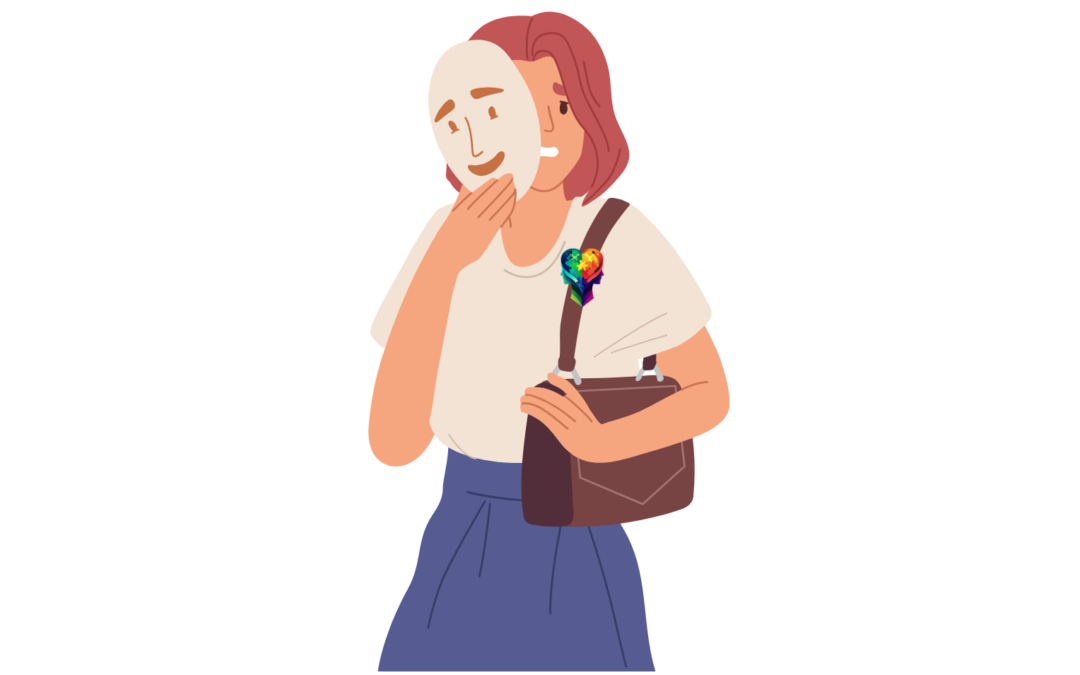
Have you ever felt the pressure to hide your emotions in fear of judgment or rejection? This phenomenon, known as emotional masking, refers to the act of hiding or suppressing one’s true emotions and presenting a different emotional state to the outside world, often as a coping mechanism to conform to societal expectations. Emotional masking can involve suppressing both negative and positive emotions, and often serves as a protective strategy in social situations.
In this blog post, we will explore the concept of emotional masking, its impact on mental health, and practical strategies for overcoming it.
Key Takeaways
- Emotional masking is a protective strategy where individuals hide or alter both negative and positive emotions to navigate social situations, which can have detrimental impacts on mental health.
- Strategies such as expressing emotions, mindfulness, seeking professional help, and supporting others can reduce emotional masking.
- Changing societal perspectives on emotions and promoting authenticity are key to reducing their prevalence.
Understanding Emotional Masking
Emotional masking is a common issue, especially among autistic individuals, who frequently feel the need to hide their emotions and behaviors to conform to societal norms, in part because autistic people can experience and express emotions differently than neurotypical peers. Individuals may consciously or unconsciously engage in emotional masking in social settings to avoid judgment and negative feedback. This practice, often known as autism masking, entails suppressing natural behaviors and reactions, and concealing genuine autistic traits to navigate social situations.
Individuals may engage in emotional masking by altering their facial expressions, body language, or words to avoid showing their true feelings. This can lead to emotional exhaustion and a disconnect from their authentic selves.
Gaining insight into the reasons for emotional masking and its impact on mental health is key to providing support for those who experience it and promoting an empathetic, inclusive society. The pressure to mask emotions is particularly intense for neurodivergent individuals, who may feel compelled to hide their traits and behaviors to fit in with neurotypical norms, leading to significant emotional strain.
Why Do People Mask?
Emotional masking is often used as a self-protective measure to gain approval and avoid stigma or negative consequences in social settings. Autism masking is particularly prevalent among women, BIPOC, and genderqueer individuals, driven by internal and external pressures to conform for social acceptance and self-preservation.
In the context of the autism community, masking autism can help individuals blend in with their neurotypical peers. Strategies employed in emotional masking, which is a common topic in the autistic community, encompass:
- Mimicking people’s phrases
- Dress sense
- Facial features
- Behaviors
- Body language
To better understand autism advocates these strategies, researchers often utilize tools like the camouflaging autistic traits questionnaire.
These strategies are used to blend in with others, but over time, masking can lead to emotional depletion and increased self-doubt. Masking can also create a sense of disconnection from one’s authentic self, leading to feelings of loneliness, isolation, and identity issues, which can hinder the formation of deep, meaningful relationships.
Consequences of Masking
Some psychological theories exist to explain the causes of emotional masking, especially in individuals with autism spectrum disorders, including those described as high-functioning autism who may be under additional pressure to appear “coping” in social situations. One theory posits that mask-wearing may alter how emotions are perceived, leading to a more comprehensive processing of the entire face.
Over time, the constant need to mask emotions can erode an individual’s sense of authenticity and well-being, making it challenging to form genuine connections and negatively impacting mental well-being.
Types of Masking
There are several types of masking, including:
- Social masking
- Emotional masking
- Identity masking
- Neurodivergent masking
Each type plays a role in helping individuals navigate social pressures and conceal aspects of themselves in different contexts.
Table: Emotional Masking vs. Camouflaging Autistic Traits
| Aspect | Emotional Masking | Camouflaging Autistic Traits |
|---|
| Focus | Hiding or suppressing emotions | Suppressing behaviors/traits associated with autism |
| Purpose | Avoid social rejection, fit in | Blend in with neurotypical society |
| Examples | Forcing smiles, pretending to be fine | Suppressing stimming, mimicking social cues |
| Overlap | May occur together, especially in autistic individuals | Often includes emotional masking |
Definition of Emotional Masking
Emotional masking, also known as autistic masking, refers to the practice of hiding or altering one’s emotions to conform to social expectations or to avoid negative responses from others. Individuals may also mask in response to negative feedback from others when expressing their true emotions or behaviors. Autism masking specifically involves autistic individuals concealing their actual autistic traits to navigate social situations.
Strategies employed in emotional masking may encompass:
- Suppressing stimming behaviors
- Carefully studying and emulating social behaviors
- Evaluating body language
- Scripting and rehearsing conversations
- Displaying excessive accommodation and assistance towards others
- Suppressing both negative and positive emotions
Emotional masking is often a protective strategy that may require conscious effort, especially in social or professional settings. Common examples of masking include forcing smiles, pretending to be fine when overwhelmed, and mimicking social cues. Masking can manifest in various forms, including social masking, emotional masking, identity masking, and neurodivergent masking, each serving to help individuals blend in with their social environment.
While emotional masking can make social interactions smoother, it also carries consequences, such as:
- Impeding the capacity to express oneself genuinely and act instinctively
- Being energetically taxing
- Taking a toll on an individual’s mental health and sense of authenticity
Emotional Masking in Autism Spectrum Disorder
People with autism often use emotional masking as a protective strategy to avoid judgment and social challenges. Masking is commonly employed by neurodivergent individuals, such as those with autism or ADHD, who feel pressured to hide their traits and behaviors in order to conform to neurotypical norms and avoid social difficulties.
Neurodivergent masking refers to the strategies used by individuals with conditions like autism or ADHD to suppress their natural behaviors and conform to societal expectations, often leading to emotional exhaustion.
The effort required to maintain this facade can be immense. It can result in emotional exhaustion and physical symptoms such as fatigue and headaches. Over time, the constant need to mask emotions can erode an individual’s sense of authenticity and well-being. This makes it challenging to form genuine connections and negatively impacts mental well-being.
The Difference Between Emotional Masking and Camouflaging Autistic Traits
While emotional masking and camouflaging autistic traits are related, they are distinct concepts.
- Emotional Masking: Hiding or suppressing emotions to avoid social rejection or to fit in.
- Camouflaging Autistic Traits: Suppressing behaviors or characteristics associated with autism, such as repetitive behaviors (stimming), unique communication styles, or natural reactions, to blend in with neurotypical society.
Despite these differences, the two strategies often overlap. Autistic individuals may use both emotional masking and camouflaging to navigate social situations, striving to meet societal expectations while concealing their true selves.
Who Engages in Emotional Masking?
Emotional masking is not unique to autistic individuals; it is a behavior that anyone can engage in. Often, individuals may engage in masking as a conscious effort to avoid judgment, deliberately suppressing or managing their emotions and behaviors to conform to social norms.
However, autistic people may be more likely to use emotional masking as a coping mechanism due to the social challenges they face. Research suggests that autistic females, in particular, may engage in emotional masking more frequently due to societal expectations and feelings of isolation. Recognizing female autism and its masked presentation is crucial for offering appropriate understanding and support.
Masking can negatively impact personal well-being and hinder the development of genuine relationships, as individuals may prioritize pleasing others over expressing their authentic thoughts and feelings. This can prevent genuine social connections, as others only perceive the masked persona rather than the true self.
Emotional masking can significantly impact the development of genuine relationships, making it difficult to build meaningful connections based on authenticity. Nonetheless, emotional masking can affect anyone, regardless of their neurotype or background. Recognizing that this behavior is widespread can help foster a more inclusive and understanding environment for all individuals.
Autistic Traits and Emotional Masking
Autistic traits, such as difficulties with social communication and sensory sensitivities, can contribute to the need for emotional masking. Masking often involves suppressing natural behaviors in order to fit societal expectations and avoid judgment.
Autistic individuals may feel compelled to hide their genuine emotions to avoid being perceived as “different” or to prevent social rejection. This constant suppression can lead to feelings of inauthenticity and significantly impact mental health.
The ongoing monitoring and regulating of behavior due to masking is mentally draining and often leads to fatigue. Masking can also lead to emotional exhaustion and worsen mental health, frequently resulting in severe mental health costs, including burnout, anxiety, and a loss of authentic self-identity.
The internal conflict between wanting to express genuine emotions and the fear of negative social consequences can result in heightened stress, anxiety, and depression. This underscores the importance of understanding and addressing emotional masking in the autistic community.
Non-Autistic Individuals and Emotional Masking
Non-autistic individuals can also engage in emotional masking, often using it as a protective strategy to navigate social situations and avoid judgment or rejection. While it may not be as prevalent or intense as it is in autistic individuals, the pressure to conform to societal expectations or to hide genuine emotions—both negative and positive emotions—to maintain social roles or protect oneself is a shared experience.
Masking can involve suppressing not only distress or discomfort but also positive emotions, such as enthusiasm or joy, to fit in or avoid negative reactions. However, non-autistic individuals may not face the same level of social challenges as autistic individuals, and their emotional masking may not be as deeply ingrained.
It is crucial to recognize that emotional masking is a common phenomenon that can affect anyone, regardless of their neurotype or background. By acknowledging and accepting this behavior, we can work towards creating a more inclusive and supportive society that values authenticity and diversity.
The Connection Between Emotional Masking and Mental Health Issues
Emotional masking can significantly affect mental health negatively. Masking often involves concealing one’s true emotions and mental health symptoms, as individuals hide their genuine feelings and behaviors to navigate social situations. This practice, known as mental health masking, is common among neurodivergent individuals and those with mental health conditions.
Autism masking, in particular, can lead to heightened rates of depression and anxiety among autistic individuals due to the constant effort required to conceal their actual traits. Studies have demonstrated a substantial correlation between high levels of masking autistic characteristics, including autistic traits, and heightened rates of depression and anxiety among autistic individuals.
Engaging in masking necessitates constant surveillance, modification of autistic behaviors, and the inhibition of one’s genuine self. This internal discord between conforming to allistic expectations and the innate craving for self-expression can result in emotional anguish, a sensation of dissonance, and a diminution of individual identity, especially in marginalized groups such as the autistic community.
Masking can result in autistic burnout when life’s demands exceed an individual’s resources. It can result in severe physical and mental health complications such as depression and anxiety. Individuals with mental health conditions, such as anxiety and mood disorders, may mask their symptoms to avoid stigma and judgment, presenting a facade of normalcy to protect themselves from negative perceptions.
Furthermore, masking can lead to negative consequences, including reduced self-esteem and loss of personal identity. Defining autistic burnout, stress, anxiety, depression, physical health issues, feelings of isolation, and detachment from others can be exacerbated, making it difficult to obtain an accurate autism diagnosis for an autistic person, especially autistic adults with autism spectrum disorder, even though a late-in-life autism diagnosis can profoundly reshape self-understanding and access to support.
Emotional Suppression
What Is Emotional Suppression?
The suppression of emotions can involve hiding both negative and positive emotions, as individuals may feel compelled to display or fake positive emotions to maintain social roles or avoid negative reactions. This ongoing suppression can lead to heightened stress, anxiety, and depression, alongside physical health issues, especially among individuals with autism spectrum conditions.
Autism masking, which involves suppressing autistic traits, can exacerbate these mental health issues due to the ongoing effort to conform to societal expectations. Research has demonstrated that emotional suppression can have a detrimental effect on stress levels, as it can increase heart rate, anxiety, and the risk of health issues, and in some people overlaps with challenges like alexithymia, or difficulty identifying and describing feelings.
Effects of Emotional Suppression
Suppressing emotions can lead to a buildup of anxiety, irritability, and moodiness as the suppressed emotions continue to exert their influence. Over time, this sustained effort to hide one’s true feelings or identity can result in emotional depletion—mental and emotional exhaustion that contributes to fatigue, disillusionment, and difficulties in forming genuine relationships, ultimately leading to burnout. Ultimately, this can have a negative impact on our overall well-being, both physically and psychologically.
Research has indicated that there is a positive correlation between emotional suppression and anxiety. Specifically, individuals with developmental disorders who employ expressive suppression to manage negative emotions may experience heightened levels of anxiety. Moreover, people with anxiety disorders may struggle to regulate their response to negative emotions.
The suppression of emotions can lead to depression due to the hindrance of healthy emotion processing and expression. When emotions are repressed, they can accumulate and give rise to feelings of despondency, hopelessness, and despair. Moreover, the repression of emotions can result in increased stress and anxiety, both of which are established risk factors for depression. Consequently, it is essential to recognize and express our feelings to sustain good mental health.
Social Isolation
The Link Between Masking and Social Isolation
Emotional masking and social isolation are correlated in terms of their impact on mental health. Masking often occurs in social settings, where individuals may feel pressured to conform to social expectations and avoid discomfort or social rejection. Autism masking can further contribute to social isolation as autistic individuals may struggle to form genuine connections while concealing their actual traits.
Social isolation, a lack of social connections and interactions, can cause loneliness and emotional distress. In an attempt to cope with these feelings, individuals may engage in emotional masking, which is hiding their genuine emotions and maintaining a facade of well-being. This emotional masking can further contribute to social isolation by preventing individuals from seeking support and connection. Consequently, emotional masking and social isolation can form a cycle where one reinforces the other, thus having a detrimental impact on mental health.
Effects of Social Isolation
It has been noted that those who engage in emotional masking tend to conceal their true emotions and struggles from others, presenting a façade of contentment. This can hinder the formation of genuine relationships and lead to a lack of authentic connections, which in turn can exacerbate feelings of loneliness.
Masking can also create a sense of disconnection from one’s authentic self, leading to feelings of loneliness, isolation, and identity issues, particularly among neurodivergent individuals.
Emotional masking can negatively affect social relationships by obstructing the precise expression and discernment of emotions. Wearing masks can impede the capacity to detect social cues and the transparency of emotions, resulting in miscommunication and confusion in social encounters. Furthermore, emotional masking may create a barrier to forming strong emotional bonds with others, as it can prevent individuals from thoroughly articulating their genuine emotions and susceptibilities.
Recognizing Signs of Emotional Masking
Recognizing signs of emotional masking is instrumental in assisting individuals in identifying and addressing the issue. Often, these signs reveal when someone is making a conscious effort to suppress their natural reactions in order to conform to social norms or avoid judgment.
Being aware of the physical indicators and behavioral patterns associated with emotional masking can provide valuable insight into the underlying emotions and struggles an individual may be experiencing.
Comprehending these signs can promote a deeper understanding of autism and acceptance of oneself and others, fostering improved mental health and relationships.
Physical Indicators
Physical signs of emotional masking can be detected through changes in body language, facial expressions, and tone of voice. In addition to these, physical symptoms such as fatigue and headaches can also be signs of emotional masking, as the emotional exhaustion from masking often manifests physically.
When people suppress their emotions, their body language may be altered in various ways. Common signs may include:
- Limited facial expressions
- Tense body posture
- Avoiding eye contact
- Restrained gestures
- Incongruity between verbal and non-verbal cues
Studies have indicated that wearing face masks can affect the recognition and communication of emotions through facial expressions. This can make it challenging to discern and interpret emotions such as anger, surprise, and happiness accurately, thus demonstrating a correlation between facial expressions and emotional masking.
Behavioral Patterns
Behavioral patterns associated with emotional masking may involve avoiding specific social situations together, overcompensating during social interactions, or indulging in self-destructive behaviors. Masking can also involve suppressing repetitive behaviors to appear more neurotypical.
Some examples of avoidance behaviors that may be employed to mask emotions include:
- Escapism
- Drug and alcohol use
- Daydreaming
- Burying emotions
- Social isolation
- Substance abuse
- Avoiding eye contact
- Ruminating on thoughts
- Withdrawing from social interactions
Individuals may consciously or unconsciously engage in masking behaviors. Overcompensation in social interactions can indicate emotional masking, as it can be employed to conceal one’s true emotions and present a more socially acceptable image. This necessitates a cognitive and emotional effort to monitor and regulate behavior to fit in with social norms, which can lead to an overcompensation of certain emotions or behaviors. This overcompensation is a mask, obscuring any underlying emotions or vulnerabilities from view.
Strategies for Overcoming Emotional Masking
Overcoming emotional masking is a gradual process that requires cultivating mindfulness, expressing emotions, and seeking professional help when necessary. Unmasking involves allowing oneself to express genuine emotions and being true to one’s feelings, which can foster deeper connections with others.
Creating supportive environments can help individuals express their authentic selves and reduce the need for masking. Finding safe people to unmask around can help individuals practice showing their true selves and build confidence in their authenticity. Starting small by gradually revealing bits of one’s authentic self in conversations can make the process of unmasking feel more manageable and less overwhelming.
By addressing the root causes of emotional masking and fostering a deeper understanding of one’s emotions, individuals can work towards being more authentic and improving their mental health and relationships.
Mindfulness and Self-Awareness
Adopting mindfulness and self-awareness can help individuals recognize when they are indulging in emotional masking and strive toward authenticity. Mindfulness is the practice of being totally attentive and aware of the present moment without evaluation.
Practicing mindfulness can help individuals reconnect with their authentic self, supporting genuine self-expression and reducing the disconnection caused by masking. It can aid in conquering emotional masking by augmenting self-awareness and permitting individuals to identify and recognize their genuine emotions.
Cultivating self-awareness can also reduce emotional masking by enabling individuals to recognize and acknowledge their genuine emotions.
Emotional Expression
Promoting emotional expression, be it through journaling, art, or conversation, can assist individuals in processing and releasing suppressed emotions. Expressing one’s own needs is also an important part of overcoming emotional masking, as it helps individuals move beyond people-pleasing behaviors and begin to honor their personal desires.
Expressing emotions may include:
- Conversing with a reliable confidant or relative
- Writing in a diary
- Participating in artistic endeavors such as painting or sketching
Emotional expression can help individuals better understand and manage their emotions by providing an outlet for self-expression, ultimately fostering better mental health and relationships.
Seeking Professional Help
Turning to a mental health professional, like therapy or counseling, can offer guidance and support in combating emotional masking. Professional support can help address mental health challenges related to masking, which often arise from coping with social pressures and can impact authentic relationships and overall well-being.
Therapy or counseling can provide a secure and encouraging atmosphere in which individuals can:
- Investigate and articulate their genuine emotions
- Gain insight into and comprehension of their masked emotions
- Cultivate beneficial coping mechanisms
- Strive for genuine self-expression
Furthermore, therapy can help individuals foster self-awareness, refine emotional regulation, and form healthier relationships, which is especially important for those coping after a late-in-life autism diagnosis who may be unlearning years of habitual masking. I’d love to support you on your unmasking journey. Please Book a FREE 20-minute “Clarity & Connection” Zoom session to learn more about the work I offer.
Supporting Others in Their Emotional Masking Journey
Supporting others through their emotional masking journey entails:
- Active listening
- Fostering openness
- Providing a safe space for individuals to share their emotions without fear judgment, which can often prevent them from expressing their true emotions
- Fostering emotional authenticity
By creating supportive environments that help reduce this fear, we can help lessen the prevalence of emotional masking and its negative effects on mental health.
Active and Reflective Listening
Active or reflective listening and empathetic responses can help establish a safe environment in which individuals can express their emotions without fear of judgment.
Steps to Active Listening:
- Cease conversation and concentrate attentively on the speaker.
- Be attentive and composed.
- Notice nonverbal cues.
- Be wholly present and make appropriate eye contact.
- Ask open-ended questions.
- Recite and summarize what the speaker has said.
- Supply minimal encouragement and ponder the speaker’s words.
- Offer feedback and articulate the core emotion if given the opportunity.
These strategies can help create a supportive environment for active listening and understanding in emotional masking.
Encouraging Openness
Promoting openness and vulnerability in relationships can aid in dismantling barriers erected by emotional masking. Reducing fear judgment and working to avoid stigma can help individuals feel safe to express their authentic selves.
To promote transparency in someone who practices emotional masking, it is essential to:
- Establish a secure and unbiased environment for open dialogue
- Motivate them to articulate their sentiments and emotions
- Be candid with one’s own emotions
- Present chances for self-expression
- Cultivate open communication channels
The Role of Society in Emotional Masking
Society significantly influences emotional masking, with cultural mores and perceptions molding how individuals express emotions. Societal expectations and norms significantly influence individuals’ emotional expressions and behaviors, often leading them to mask their true feelings to conform to what is deemed acceptable in public settings. These expectations can also lead to identity masking, where people conceal aspects of their identity—such as cultural background, sexuality, or gender—to avoid judgment or discrimination.
Understanding how cultural norms and expectations contribute to emotional masking can help promote emotional authenticity and reduce its prevalence. Masking can also occur in professional settings, such as healthcare, finance, law, and customer service, where individuals are often expected to maintain a composed and approachable demeanor. In many professional environments, emotional masking is often expected, as individuals may feel compelled to suppress their true emotions to maintain a professional demeanor and avoid appearing vulnerable.
Cultural Influences
Cultural standards and societal expectations can contribute to emotional masking, as some emotions might be unacceptable or inappropriate. Masking often occurs in various social settings, where individuals may hide their true emotions to conform to social expectations or avoid discomfort and social rejection.
Additionally, emotional masking can be a response to negative feedback—when people receive criticism or discouraging responses for expressing their authentic emotions or behaviors, they may suppress their true selves to avoid further negative reactions. Display rules, socially and culturally determined rules regarding the appropriateness of specific emotional expression in various contexts, may differ from one culture to another and involve intensifying or suppressing emotions.
Research indicates that cultures with higher levels of collectivism, such as certain Asian cultures, may emphasize emotional masking and restraining emotions to promote social harmony, and in neurodivergent people this can intersect with patterns like lying as a fear-based or overwhelm response rather than deliberate deception. Nevertheless, it is essential to consider that emotional masking can occur in various cultures to some degree and that changing perceptions of emotional expression are intricate and continuous.
Changing Perceptions
Altering societal perceptions and advocating for emotional authenticity can help reduce emotional masking and its adverse impact on mental health. Promoting authenticity encourages individuals to live a more authentic life, allowing them to reveal their true emotions and feelings.
By changing societal perspectives on emotions, we can create a more accepting and understanding environment for individuals to express their genuine emotions and experiences, particularly for autistic women whose masking often hides their support needs.
This can lead to a decrease in emotional masking and its associated mental health issues.
Summary
In conclusion, emotional masking is a prevalent issue that can significantly impact mental health and relationships. Masking can involve suppressing both negative and positive emotions to fit in, maintain social roles, or avoid negative reactions.
By understanding the reasons behind emotional masking and its connection to mental health, recognizing signs of emotional masking, and employing strategies for overcoming it, individuals can work towards being more authentic and fostering better mental health and relationships.
Moreover, supporting others in their emotional masking journey and promoting emotional authenticity on a societal level can help reduce the prevalence of emotional masking and its negative effects on mental health, while perspectives that reframe neurodivergent masking as a complex survival strategy can foster greater compassion and safer opportunities to unmask. Unmasking is a gradual process that requires patience, consistency, and time.
I’m Barbara (Blaze) Lazarony, MA, LMFT #151788. I work with neurodivergent adults and neurodiverse couples.
Frequently Asked Questions
What is an example of masking emotions?
Masking emotions means controlling facial expressions to conceal true feelings, such as smiling or maintaining a neutral look, even in sadness or despair. Masking can involve suppressing both negative and positive emotions—people may fake or hide positive feelings to fit in, maintain social roles, or avoid negative reactions. This is done to prevent drawing attention to internal struggles.
How can you tell if you’re masking?
Masking behaviors may include mirroring, rehearsing scripted responses, imitating gestures, and difficulty hiding autism traits in unfamiliar settings. Individuals may consciously or unconsciously engage in masking to avoid judgment from others. Pay attention to these signs to determine if you or someone you support is masking their autism.
What is Autistic Masking?
Neurodivergent masking is the practice coping strategy of concealing or suppressing aspects of one’s neurodivergent traits to fit into the norms of society. Autistic masking, also referred to as camouflaging or neurodivergent masking, often involves suppressing repetitive behaviors and natural reactions in order to conform to societal expectations and be perceived as neurotypical.
How can I support someone who practices emotional masking?
Listen actively, create environments that are supportive and inclusive, provide a safe and non-judgmental space for discussion, and encourage openness and vulnerability to show your support for someone practicing emotionally masking autism. Creating such environments helps individuals express their authentic selves and reduces the need for masking.







